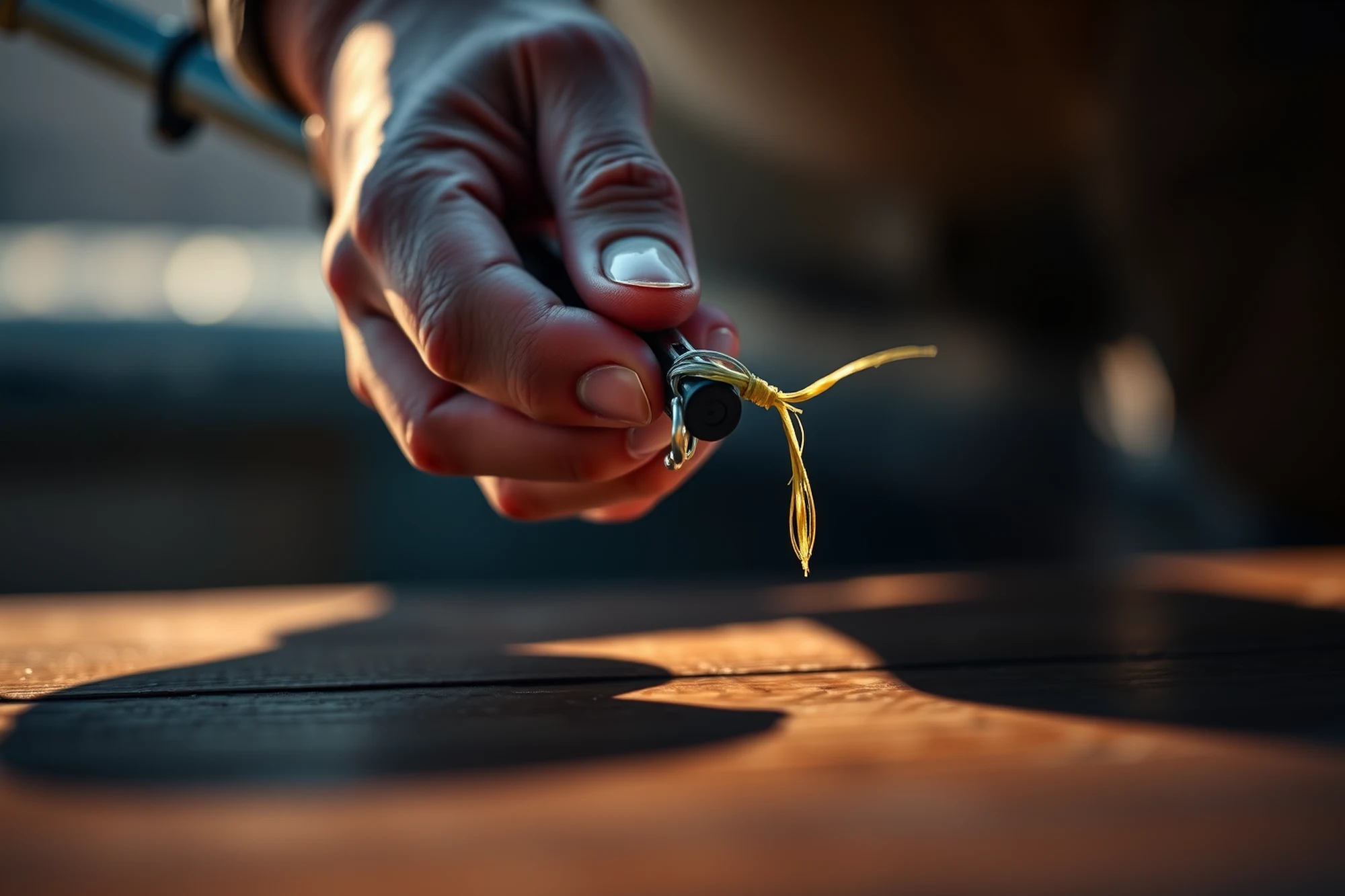
NAUGHTY KNOTS · 8 GUIDES
NAUGHTY KNOTS · 8 GUIDES
Most anglers know two knots and use them for everything. That works until a clinch knot pins a jerkbait's nose and kills the action, or a blood knot joins braid to fluoro and the thin line slides out on the first good fish.
Every knot below has one job it is best at. The table matches the knot to the job; each guide walks through tying it, the step where people usually mess it up, and when to use a different knot instead.
| KNOT | THE JOB | READ |
|---|---|---|
| Non-slip (Rapala) loop | Lure connection for hard jerkbaits; the open loop lets the bait swing free. | How to tie it in six moves |
| Palomar | The default terminal knot if you only learn one. | Lake and pond knots |
| Improved clinch | The classic hook and lure knot, done right on light line. | Ice fishing knots |
| FG knot | Slimmest braid-to-leader connection; slow to tie. | Step by step |
| Double uni | Braid to fluoro, mismatched diameters; the easier everyday choice. | Step by step |
| Blood knot | Joins two lines of matched diameter with no bump. | Why yours unravels |
| Surgeon's knot | Fast leader changes standing in the river. | Stream and river knots |
| Davy knot | Small and quick for micro jerkbaits on light line. | Stream and river knots |
| Snell | Mandatory for circle hooks. | Saltwater knots |
Non-slip (Rapala) loop
Lure connection for hard jerkbaits; the open loop lets the bait swing free.
How to tie it in six moves →Palomar
The default terminal knot if you only learn one.
Lake and pond knots →Improved clinch
The classic hook and lure knot, done right on light line.
Ice fishing knots →FG knot
Slimmest braid-to-leader connection; slow to tie.
Step by step →Double uni
Braid to fluoro, mismatched diameters; the easier everyday choice.
Step by step →Blood knot
Joins two lines of matched diameter with no bump.
Why yours unravels →Surgeon's knot
Fast leader changes standing in the river.
Stream and river knots →Davy knot
Small and quick for micro jerkbaits on light line.
Stream and river knots →Snell
Mandatory for circle hooks.
Saltwater knots →THE FULL READS
01 · 6 MIN READ
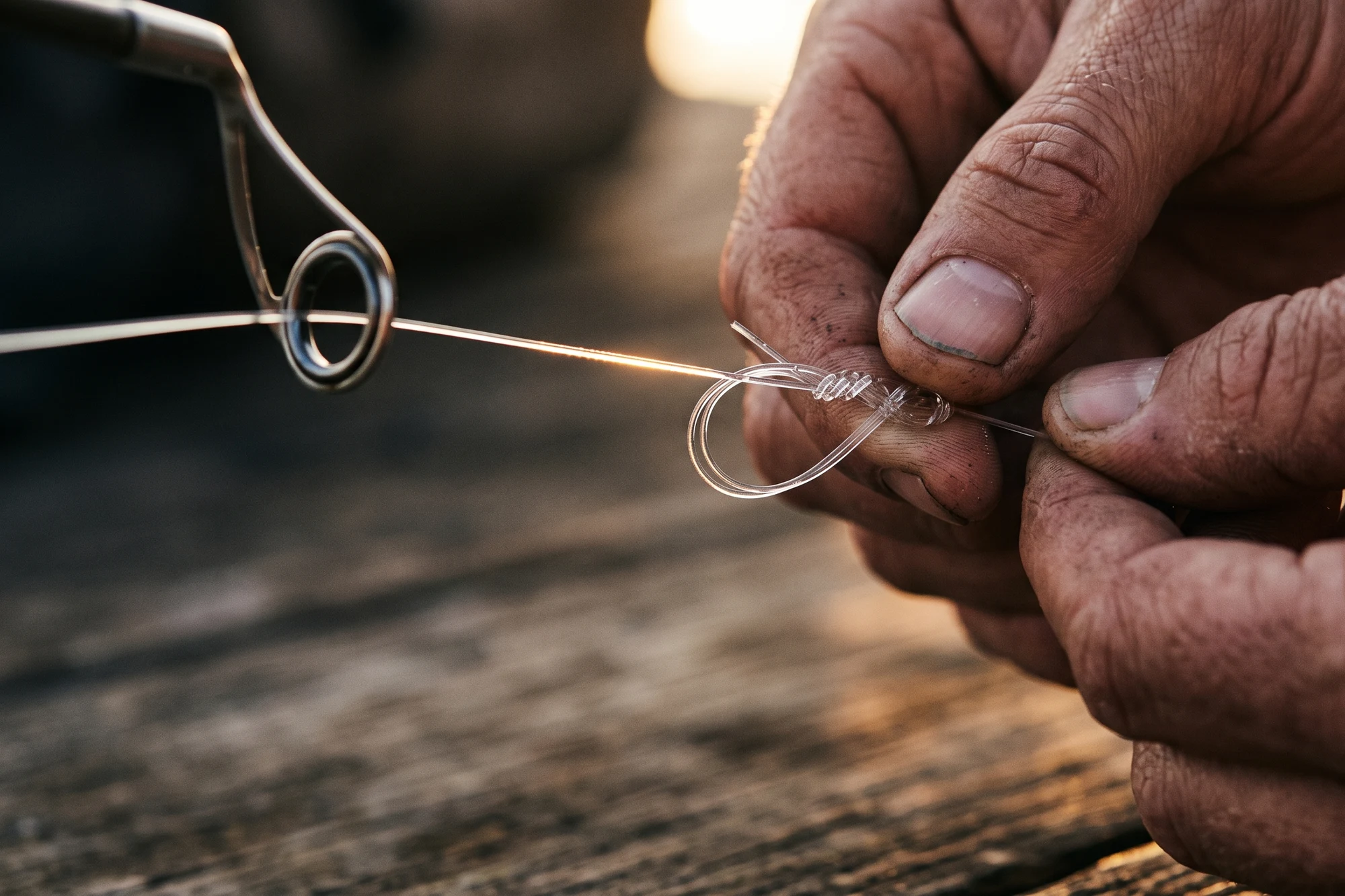
The non-slip mono loop is the knot that gives a hard jerkbait room to move — and the space inside that loop is the point of the knot, not a mistake you clean up before fishing.
02 · 6 MIN READ
The FG knot is the strongest braid-to-fluorocarbon connection a jerkbait angler will regularly tie — slimmer profile than a double uni, cleaner through the guides on a long cast, rated to hold at the full strength of the braid. It is also the knot most often tied wrong.
03 · 6 MIN READ
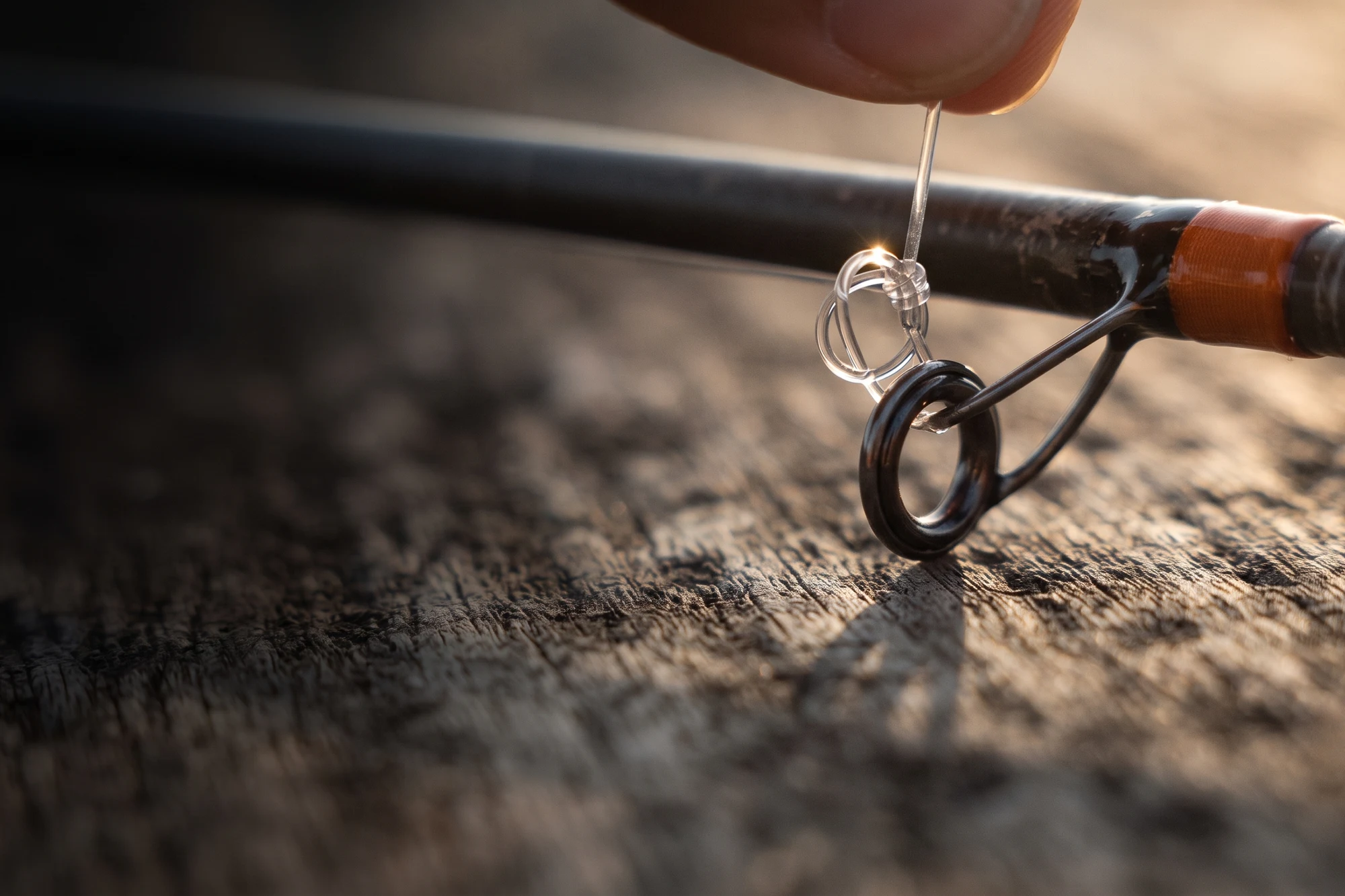
Braid main line to fluorocarbon leader is the gold-standard jerkbait connection: zero stretch where you need sensitivity, near-invisible fluoro where you need stealth. The double uni is the knot that convinces two completely different materials to stay together, and once you understand what each side is actually doing, you can tie it in the dark.
04 · 6 MIN READ
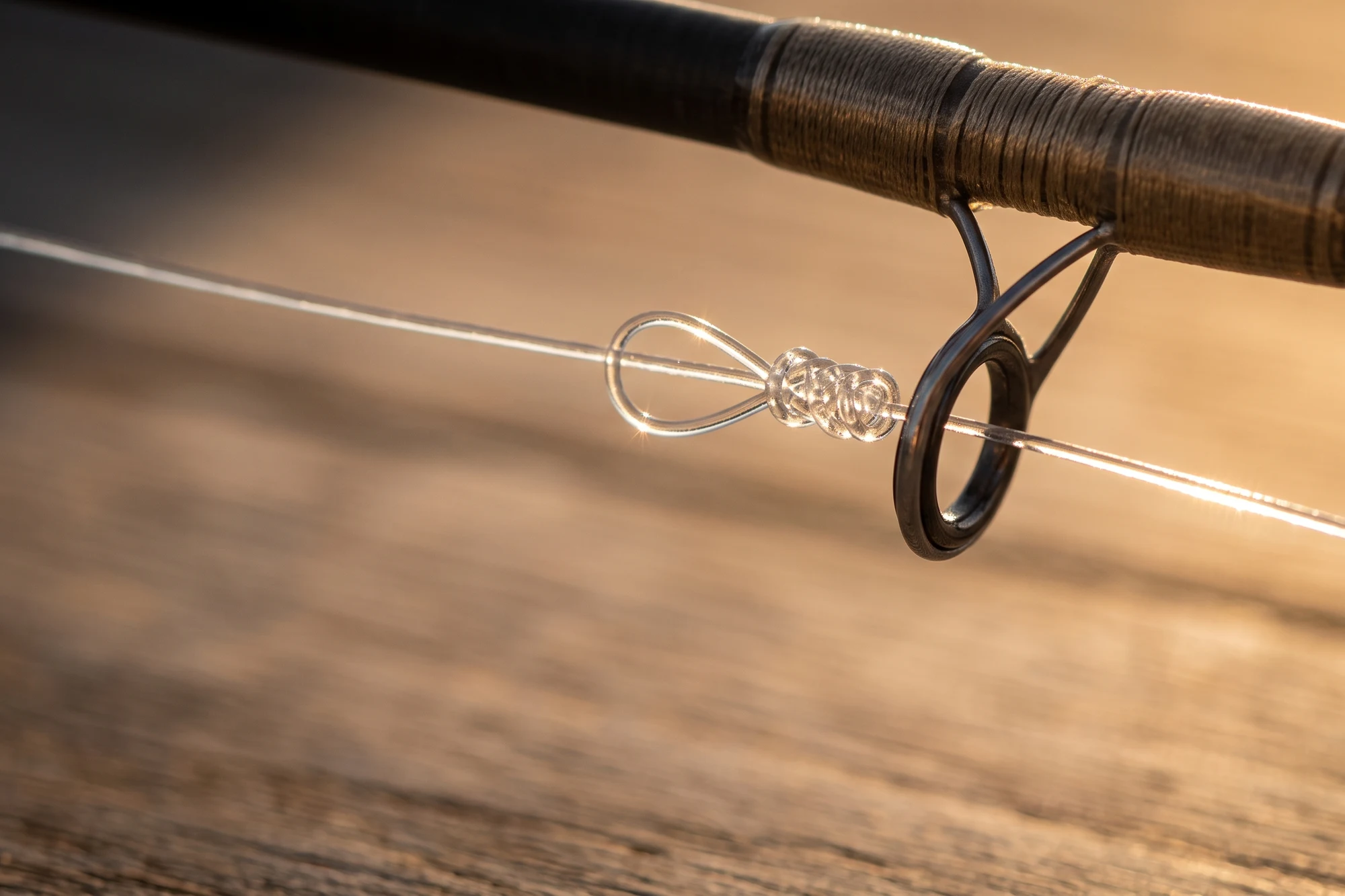
The blood knot makes the slimmest possible connection between two lines of matching diameter — slim enough to pass through guides cleanly, slim enough not to spook fish in clear water. It also fails completely if the two lines don't match, or if you pull before the wraps seat.
05 · 8 MIN READ
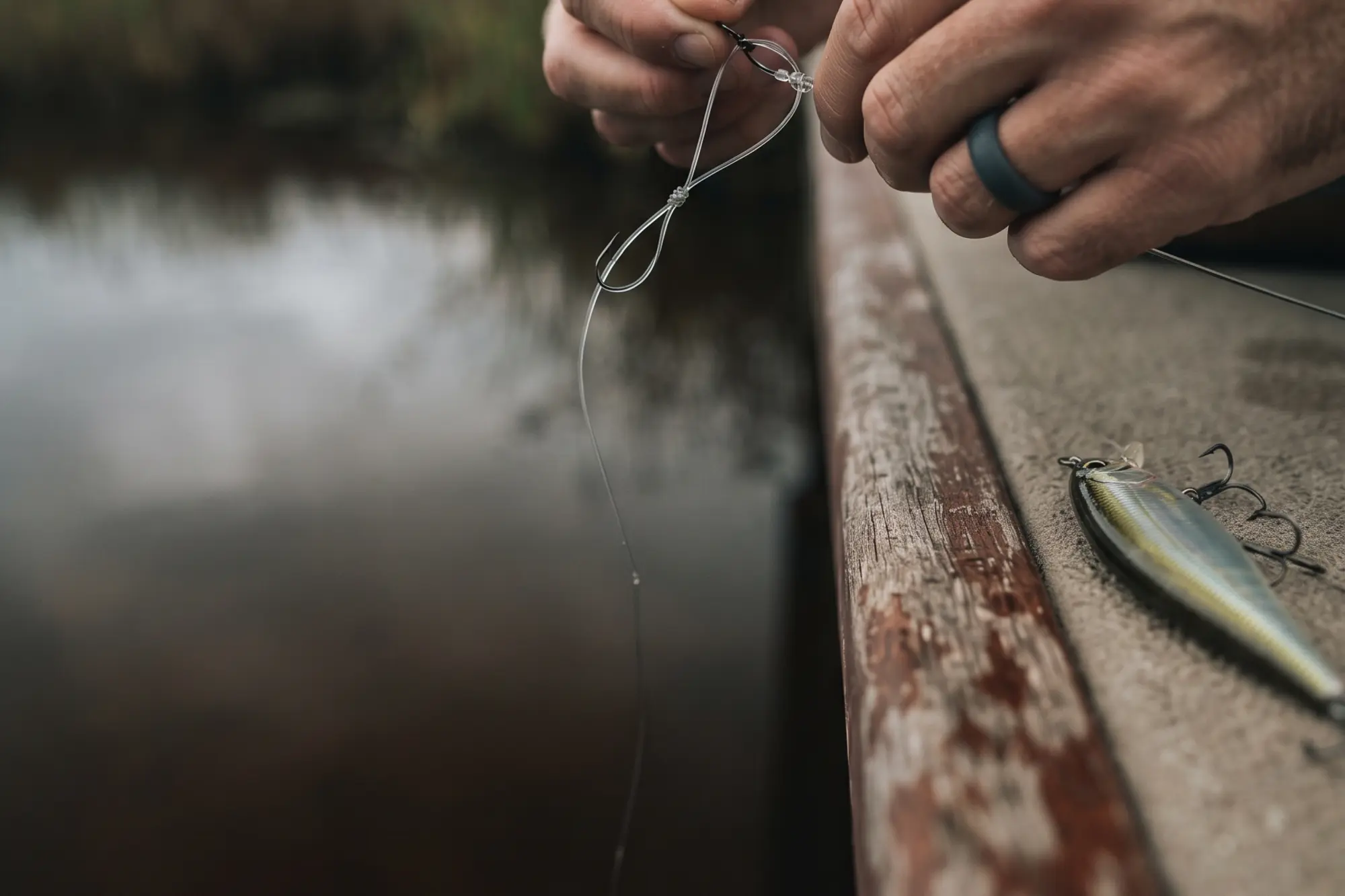
Bass and musky do not care about your knot until the exact moment they do. Palomar, improved clinch, and the one loop knot that gets more strikes on a suspending jerkbait.
06 · 7 MIN READ
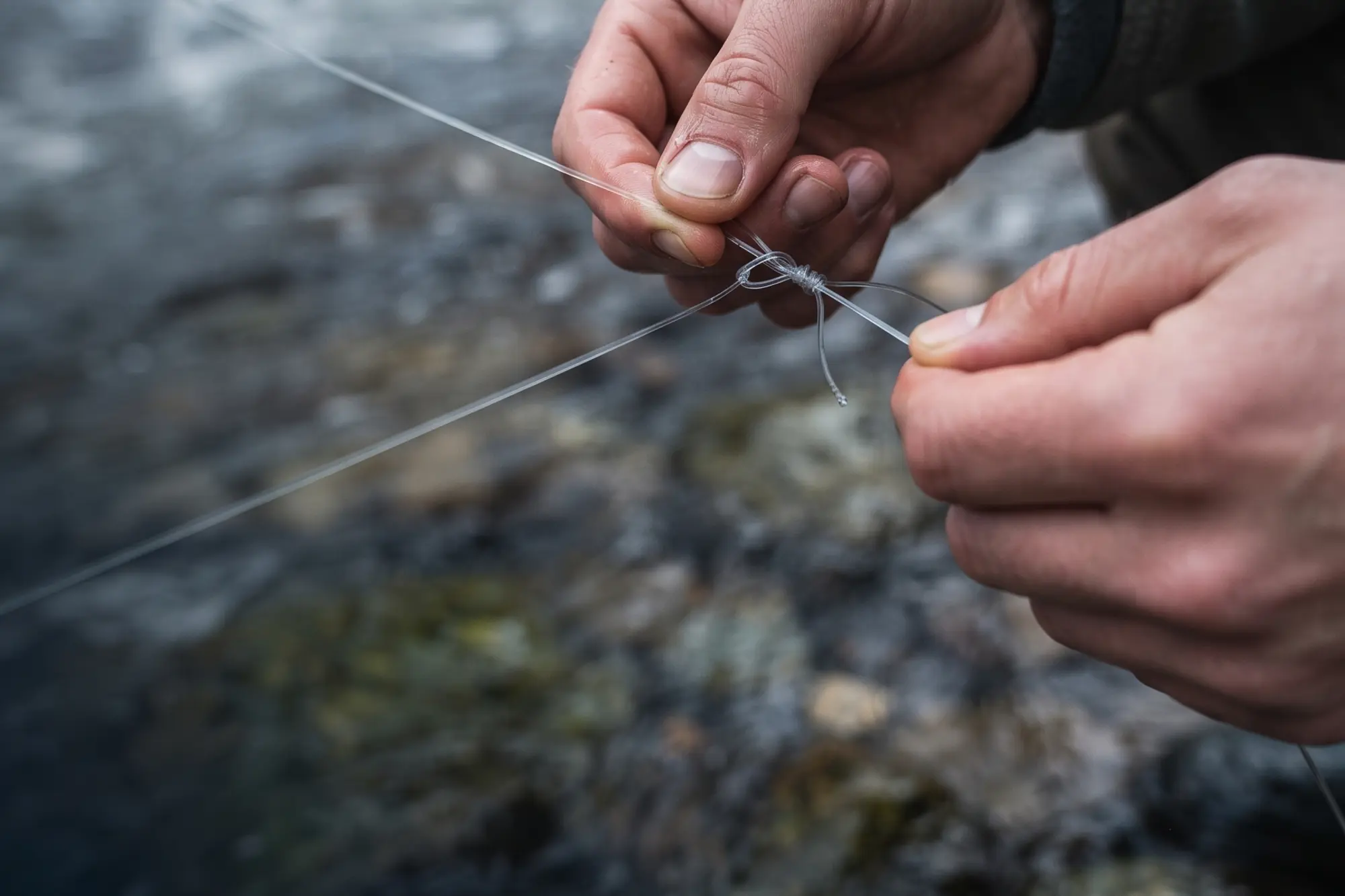
Current puts constant load on a knot a stillwater fish never would. Here is what actually holds when a smallmouth uses the flow against you.
07 · 9 MIN READ
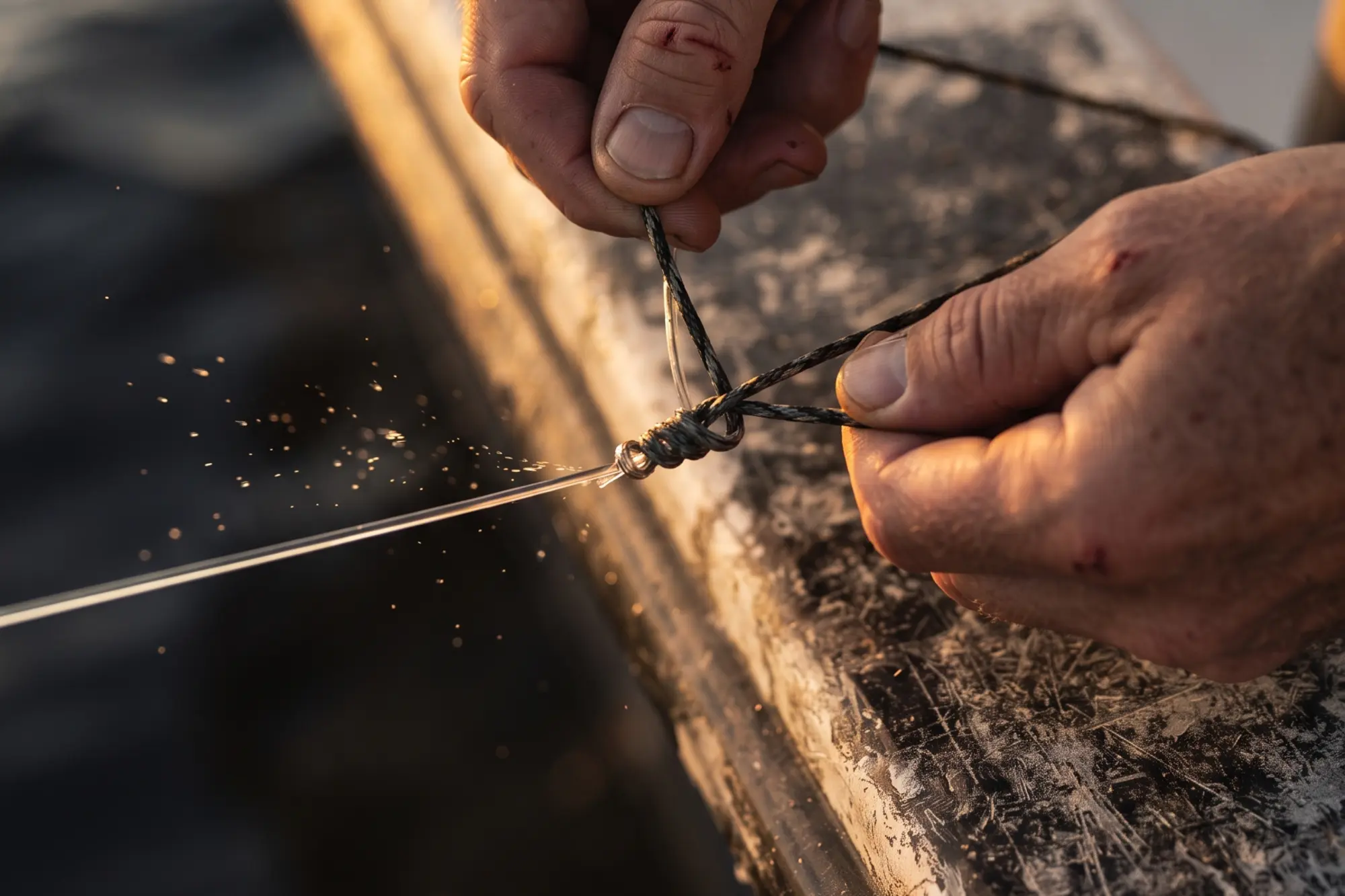
Braid-to-fluoro leaders, abrasion-heavy structure, fish that will find the one weak wrap in your line. Saltwater knots do not forgive laziness.
08 · 6 MIN READ
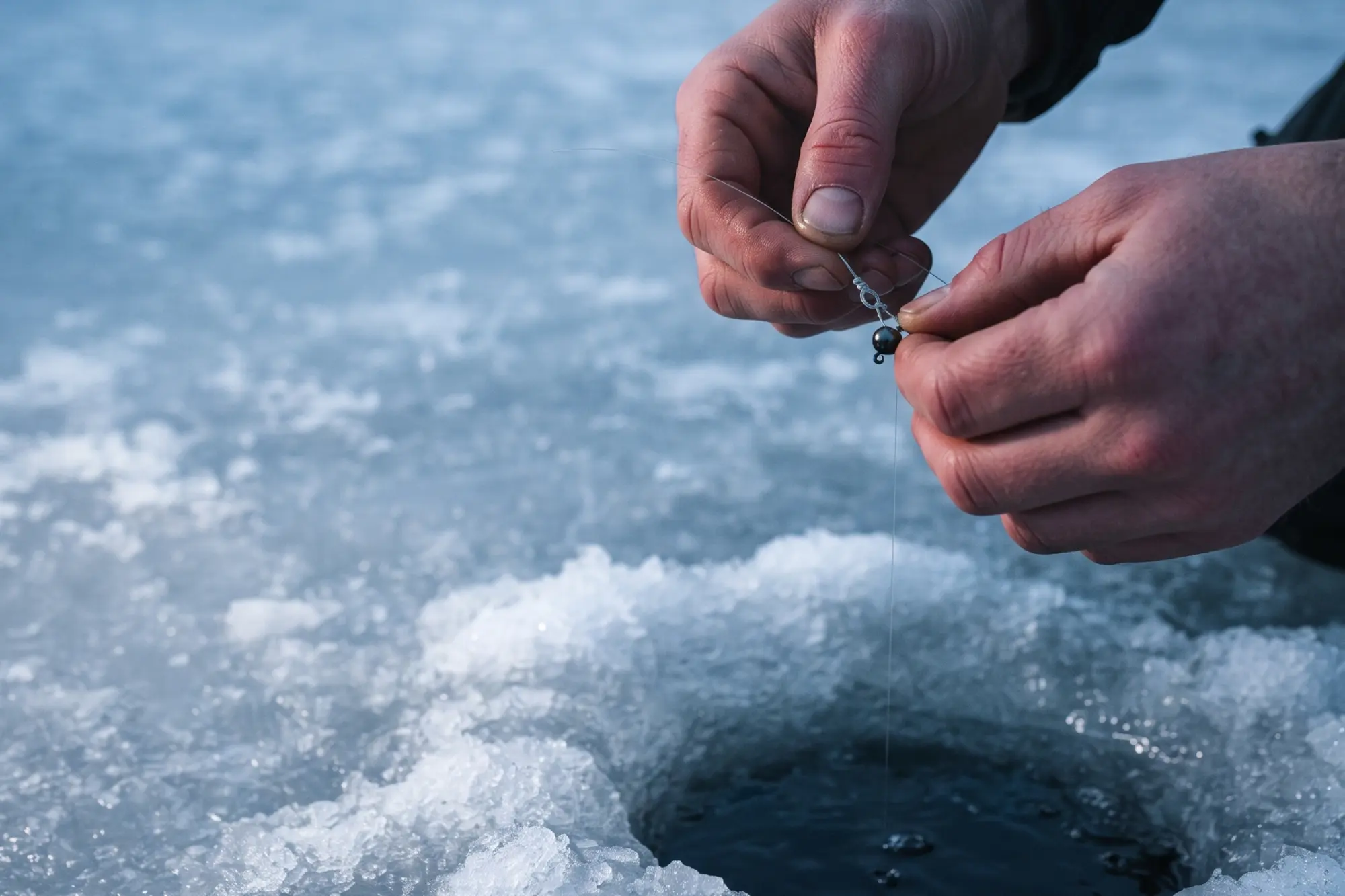
Cold hands, thin line, no room for error. The knots that hold when you are tying them at fifteen degrees with gloves half off.