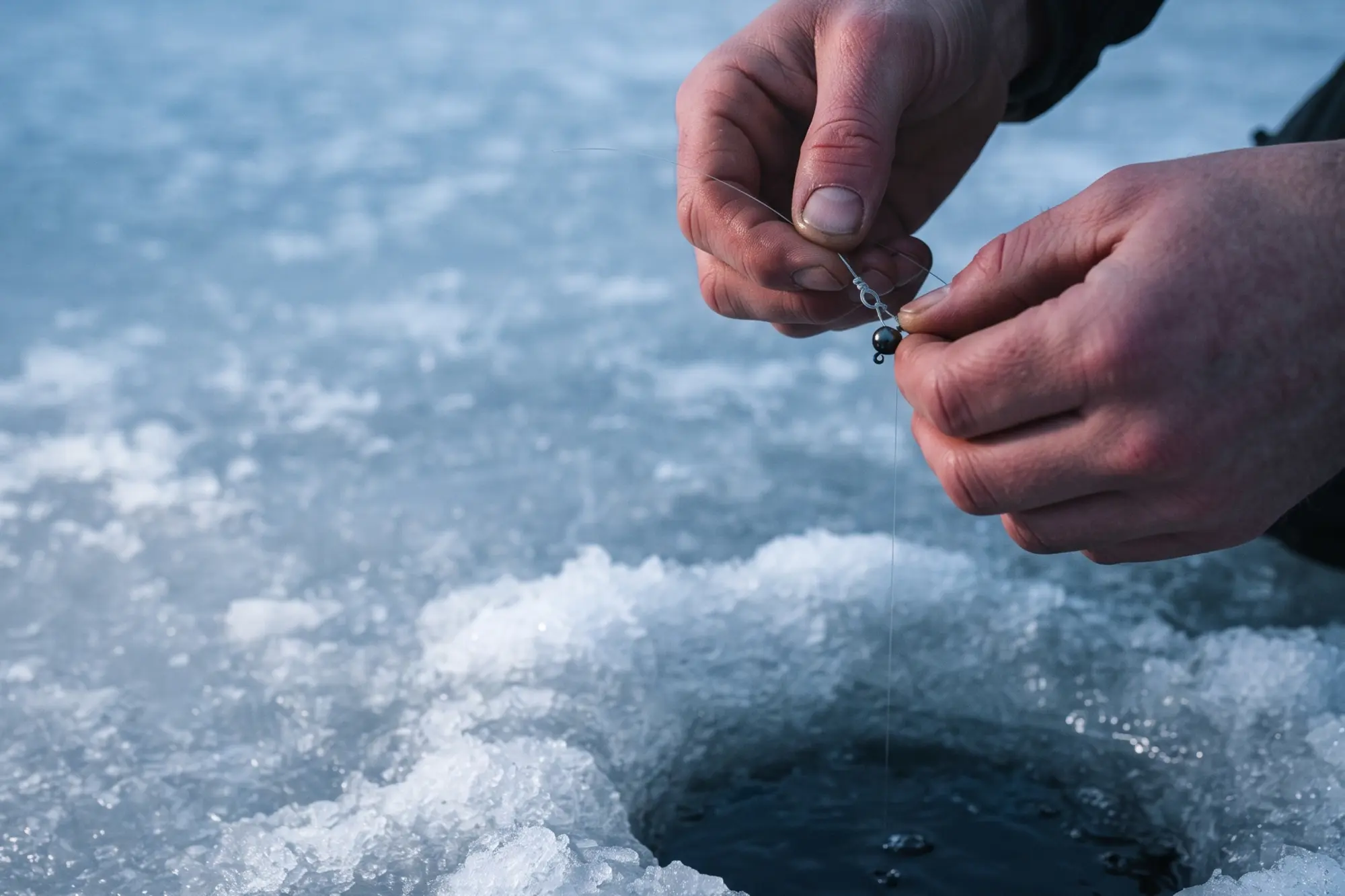
Everything about ice fishing conspires against a good knot. The line is thin, 2 to 6-lb test is normal through a hole that small, your hands are numb inside gloves you keep half-pulling off, and the line itself is cold and stiff in a way it never is on a summer lake. None of that is an excuse for a bad knot. It just means the margin for a sloppy one is gone. Two knots and a little cold-weather discipline cover almost everything you'll tie through the ice.
1. The improved clinch: done right, not done fast
Every angler already half-knows the clinch knot. The mistake on light ice line is treating it the same as you would on 12-lb bass gear. Thin line doesn't bite into itself as hard as heavy line does, so a clinch tied with the standard five wraps can slip under load exactly when you don't want it to: mid-fight, under the ice, with no slack to recover.
- Thread the tag end through the eye and make seven to eight twists around the standing line, more than you'd use on heavier line.
- Pass the tag end back through the small loop just above the eye.
- Pass it through the larger loop you just created.
- Wet the knot before you pull it tight. On cold, stiff line this matters even more than usual, since dry friction generates more heat that weakens thin line right at the cinch point.
- Pull slow and even, then trim.
The extra wraps aren't a suggestion. Light line needs them to generate enough friction to hold, and skipping them to save ten seconds in the cold is how a decent fish swims off with your jig still in its mouth.
2. The no-slip loop: because a jigging spoon needs to move
Same logic as a suspending jerkbait in open water: cinch a knot down tight against a jigging spoon's eye and you kill the exact wobble and flutter that makes it work. Ice fish are keying in on subtle vertical movement in cold, clear water. A spoon that can swing freely on the drop reads as alive. A spoon choked down by a snug clinch knot just falls straight, which is a much worse presentation for a fish that's had all winter to get suspicious of things that don't move right.
- Tie a simple overhand knot about four inches up the line, leaving it loose, and pass the tag through the spoon's eye.
- Bring the tag back up and pass it through the overhand knot again, from the same side it exited.
- Wrap the tag around the standing line three or four times.
- Pass the tag back down through the original overhand knot.
- Wet it and cinch it slowly, sizing the loop against the eye before it locks fully.
A Kastmaster chrome spoon is a good one to practice this on before you're doing it with cold hands in the field. It's a standard flutter-and-fall spoon that plenty of ice anglers already run, and the loop knot is the difference between it falling straight and dead versus kicking on the way down the way it's supposed to.
Cold-weather tying, not cold-weather suffering
The single best fix for bad ice knots isn't a better knot. It's not tying at the hole at all. Pre-tie leaders and spoon connections at your kitchen table the night before, where your fingers work and you can see what you're doing. Coil them onto a leader board or clip them to a rig wallet and you're re-rigging on the ice by swapping a loop-to-loop connection instead of tying cold. It's the same trick fly anglers use for pre-tied tippet, steal it.
Keep your line dry between holes. Wet mono and fluoro that refreezes gets brittle and knots poorly, and a spool that's been sitting open in the wind picks up ice crystals in the line itself. A quick wipe before you tie is worth the five seconds. And remember fluorocarbon behaves differently cold than it does at room temperature: it's stiffer, so it needs a slower, more deliberate cinch to seat correctly.Seaguar InvizX stays manageable in the cold better than most budget fluoro and is soft enough to still tie a clean no-slip loop with gloves half off.