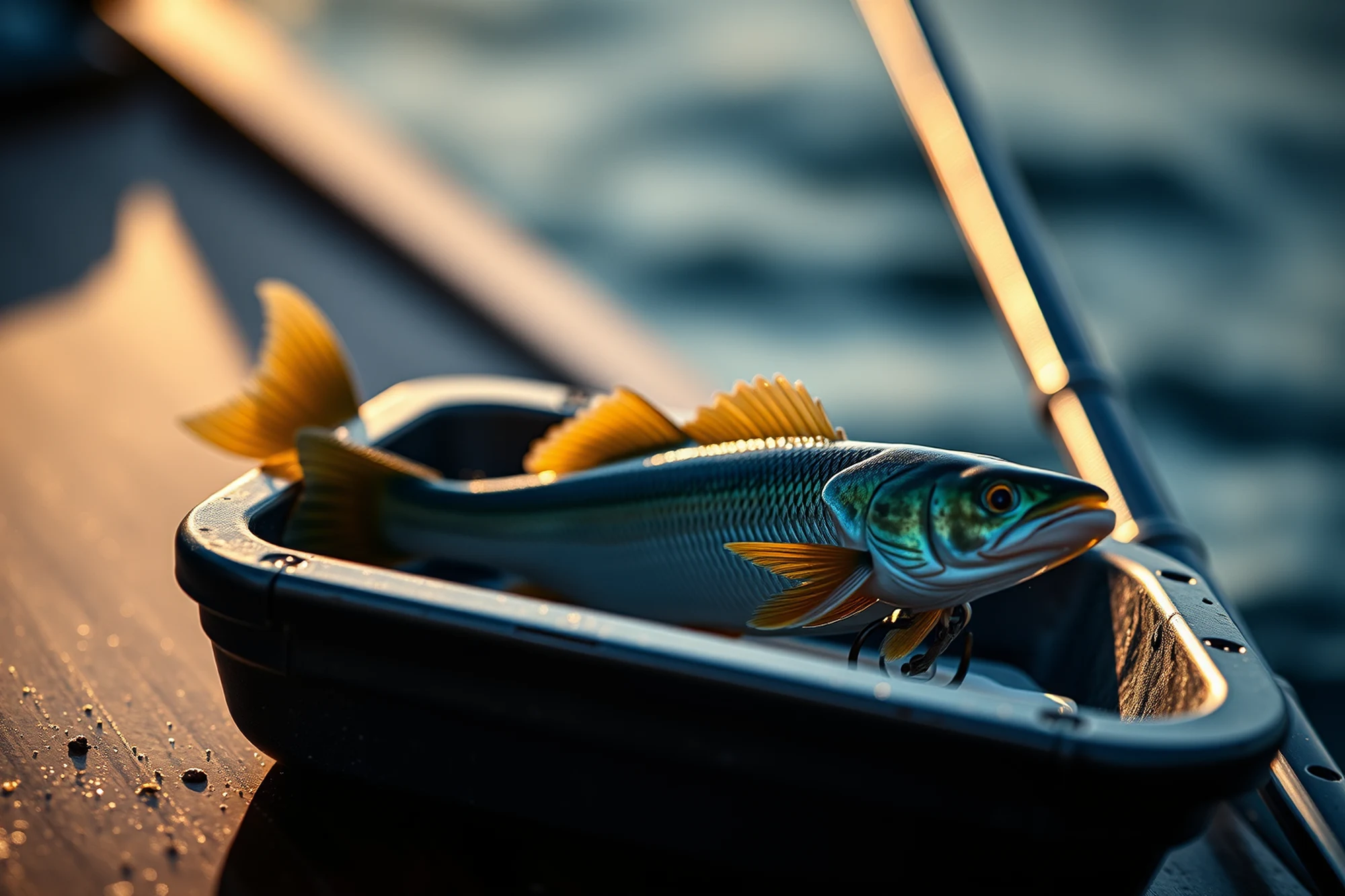
A jerkbait is a horizontal, mid-column bait. You work it down to depth on the retrieve, pause it there, and the technique depends on a fish somewhere between the surface and the bottom choosing to close the distance. When fish are suspended and willing to move, the geometry works. The bait darts, hangs, and sits in the strike zone. Fish bite.
The system breaks completely the moment every fish in the lake is on the bottom.
Not "deep." On the bottom. Parked on a gravel flat at eighteen feet, pressed tight against a ledge at twenty-two, stacked in the first foot of substrate above hard structure. A fish holding there, in a negative mood, is not going to commit to a twelve-foot vertical climb to eat something pausing at six feet. The energy-to-calorie math doesn't pencil out. They won't do it.
Longer pauses don't fix this. More aggressive cadence doesn't fix this. A color change doesn't fix this. The bait is fishing the wrong level of the water column, and that is a geometry problem. The only solution is a different bait in a different part of the column.
How to confirm fish are actually bottom-locked
Before switching presentations, confirm you have a genuine bottom-locked situation rather than just a slow morning. Three reads to make.
Marks tight to structure on the sonar. Bottom-locked fish show as arches or condensed marks hugging the bottom contour — pressed against a ledge face, sitting in the first two feet above a gravel flat, stacked directly on a point. The key is the compression: no height above the bottom, everything packed against the substrate.
No mid-column fish. Active or willing-to-react fish suspend. When bass or walleye are willing to eat, you'll see marks scattered across multiple depths — some near the surface, some at mid-column, some deeper. The absence of mid-column marks when there's clearly fish on the bottom is the tell. A screen full at the floor and empty everywhere else is a different body language than a screen showing fish at mixed depths.
Zero reaction across multiple passes. Run the jerkbait through the area. Change depth by switching to a deeper-running model or working the bait closer to the bottom. Make at least three or four passes before you conclude anything. If you're not seeing follows on sonar, not getting any bump or flash behind the bait, and not moving any fish off their spots, that's a signal worth acting on. One blank pass proves nothing. Consistent no-reaction combined with bottom-hugging sonar marks is the read.
The three conditions that push fish to the substrate
Bottom-locking isn't random. It follows predictable patterns.
Cold water. Below roughly 50°F, bass metabolism slows enough that the energy cost of climbing twelve feet for a reaction bite starts to outweigh the payoff. Fish compress into tight structure contact and stop committing to anything much above their depth. Cold-water jerkbait tactics — extended pauses, dead-slow cadence — exist to extract what bites remain from lethargic fish that are still in range of the bait. But there's a temperature and mood threshold below which the bait simply never gets down far enough to matter.
Post-cold-front conditions. Barometric pressure spike, wind switch, bright skies after a front rolls through: this combination pushes bass and walleye off their mid-column positions and into tight structure contact. They aren't feeding. They are not going to investigate a mid-column jerkbait on a reaction basis. What they might do is eat something that requires them to move two inches rather than twelve feet.
Summer midday heat. Surface temperatures above 80°F push fish down into cooler, better-oxygenated water near the thermocline — often to depths a jerkbait's dive curve doesn't reach. The fish didn't leave the area. They descended. This is the condition where anglers who caught fish on jerkbaits at dawn watch the bite die by 10am and assume the fish moved somewhere else. They didn't move laterally. They went straight down.
What actually lives on the bottom
When the sonar says fish are on the substrate and the jerkbait is fishing the ceiling, the presentations you want are the ones designed to fish where the fish are.
Drop shot. A drop shot keeps a soft plastic suspended a fixed distance above the bottom, with a weight sitting on the substrate below it. The fish doesn't have to commit to a vertical climb — it just has to move forward. You can hold the bait completely still, shake it in place, or barely move it and let line tension do the work. On clear water with tight post-front fish, a drop shot on 6-pound fluorocarbon doing almost nothing will get more bites than any jerkbait worked at any cadence.
Ned rig. A small soft plastic on a light mushroom-head jig that sits nose-up on the bottom, tail quivering with any current or rod movement. Drag it, hop it, leave it. The ned rig is one of the few presentations that consistently works on fish in near-total lockdown because the bait is physically at the fish's level and barely moving. Z-Man TRD TubeZ on a 1/10- or 3/16-ounce mushroom head is the standard starting setup. Keep the weight light enough that the plastic stands up off the bottom rather than pancaking flat on it.
Shaky head. A worm on a ball-head jig with the hook riding up. Same premise as the ned rig — the bait sits on the bottom, requires minimal movement from the fish to eat. Best on hard, relatively flat bottoms where you can drag it slowly. On rocky ledge structure with irregular terrain, the ned rig handles the texture better. If you're not sure which to start with, go ned rig first on tight fish.
Blade bait in cold water only. When fish are bottom-locked specifically in cold water — below 45°F, winter bass in twenty feet — a blade bait like a Swedish Pimple or a Gay Blade jigged vertically can produce reaction strikes that nothing else will generate. Vibration travels efficiently through cold, dense water. You are not asking the fish to move up; you are sending the vibration directly to their level and counting on a reflex response. This is a cold-water-specific play. In summer, post-front bottom-lockers don't want vibration — they want something that barely moves.
When to put it in the locker
Here is the signal. Every mark on your screen is on the bottom. Nothing is suspended. You have made multiple passes at multiple depths with the jerkbait and gotten zero reaction. The water is below 50°F, or it's post-front conditions with bright skies and a barometric spike, or it's midday in July with surface temperatures over 80°F.
Put the jerkbait in the rod locker.
Not because jerkbaits are wrong tools most days. They're not — the technique is among the most versatile in freshwater fishing when fish are willing to use the water column. But the technique depends entirely on fish being willing to come to the bait. Bottom-locked fish are not willing. No variation in cadence, pause length, or hook color overcomes a twelve-foot geometry problem.
The presentations above fish the same floor the fish do. That is the only qualification that matters when the sonar shows the whole school below where a jerkbait can reach them.
The fish are still there. Pick up something that fishes where they are.