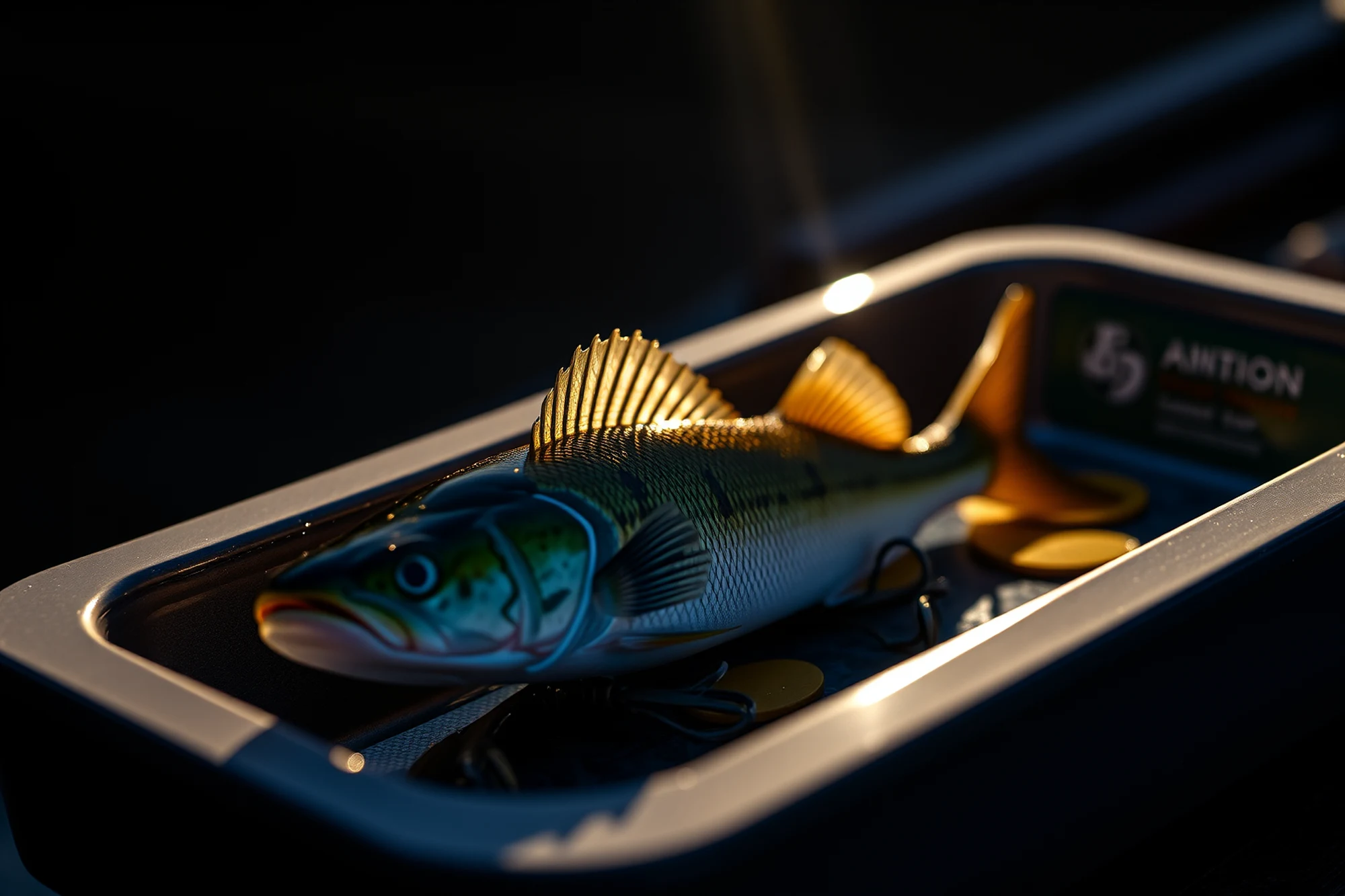
Yesterday's summer pattern can vanish while the lake cools. You mark fish above the thermocline on one trip, return with a suspending jerkbait, and spend an hour making beautiful pauses in empty water. The bait has done its job. Your map of the fish needs an update.
What fall turnover is
In a lake that stratifies in summer, warm surface water sits over colder deep water. The thermocline is the sharp temperature change between them. Deep water can lose oxygen while those layers stay separate, but that varies by lake. Our summer thermocline guide covers why that boundary can help locate fish.
As the surface cools, the temperature and density difference weakens. Wind and cooling mix water deeper until the old layered pattern disappears. The timing depends on weather and the lake's depth and shape; a shallow lake that never stratified strongly has no dramatic thermocline to lose. There is no universal surface temperature or calendar week that declares turnover complete.
How to spot it on the water
Compare water temperatures at several depths in the same basin. A probe or a local lake-monitoring profile can show whether the sharp summer temperature change has weakened or disappeared. A surface thermometer alone cannot tell you what is happening below.
On sonar, compare several places where you previously saw a consistent suspended band. If that pattern has broken up, search again around bait, points, weed edges, and creek mouths. Sonar shows targets and depth, not a fish's mood or a diagnosis of turnover. Murky water or an odd smell can have other causes, including runoff and decaying vegetation. Neither proves the lake has mixed.
When the jerkbait is the wrong search tool
Think about the bait's running depth and the water it covers on each cast. A suspending jerkbait can be excellent when you have found fish willing to chase near that depth. It is inefficient when you are still trying to locate them across a large area or several depths. Changing from a three-second pause to a five-second pause will not put the lure in a different cove. How a jerkbait searches explains how to cover water once you have a useful target zone.
Turnover does not make every bass inactive or every jerkbait useless. If fish are chasing bait along a reachable edge, fish the jerkbait. If repeated casts through promising water show no fish or follows, move and check another depth before blaming cadence.
Search, then choose a presentation
Start with places that hold bait now, not only where fish held in August. Check a point and a nearby flat at different depths. When you see bait or get a follow, make more casts through that zone.
For fish chasing across open water or along a weed edge, a lipless crankbait covers ground and lets you change retrieve depth. The Bill Lewis Rat-L-Trap is one catalog option. Count it down over open water or lift and let it fall beside cover, keeping its treble hooks clear of snags. A rattle is an option, not a promise that fish will hear it or bite.
If you locate fish close to bottom and a moving bait gets no response, try a Ned rig or drop shot at that depth. Slow the retrieve and watch the line. Bottom contact does not reach fish suspended well above it, so let the fish's position choose the rig. There is no prize for dragging plastic through an empty basin either.
When to pick the jerkbait back up
Pick it up as soon as you find fish or bait within its working depth, whether the lake has finished mixing or not. Cast beyond the target, work the lure through it, and vary the pause if fish follow without eating. If the marks vanish, go find them again. The rod locker cannot tell you when turnover ended; a fresh look at the water can.