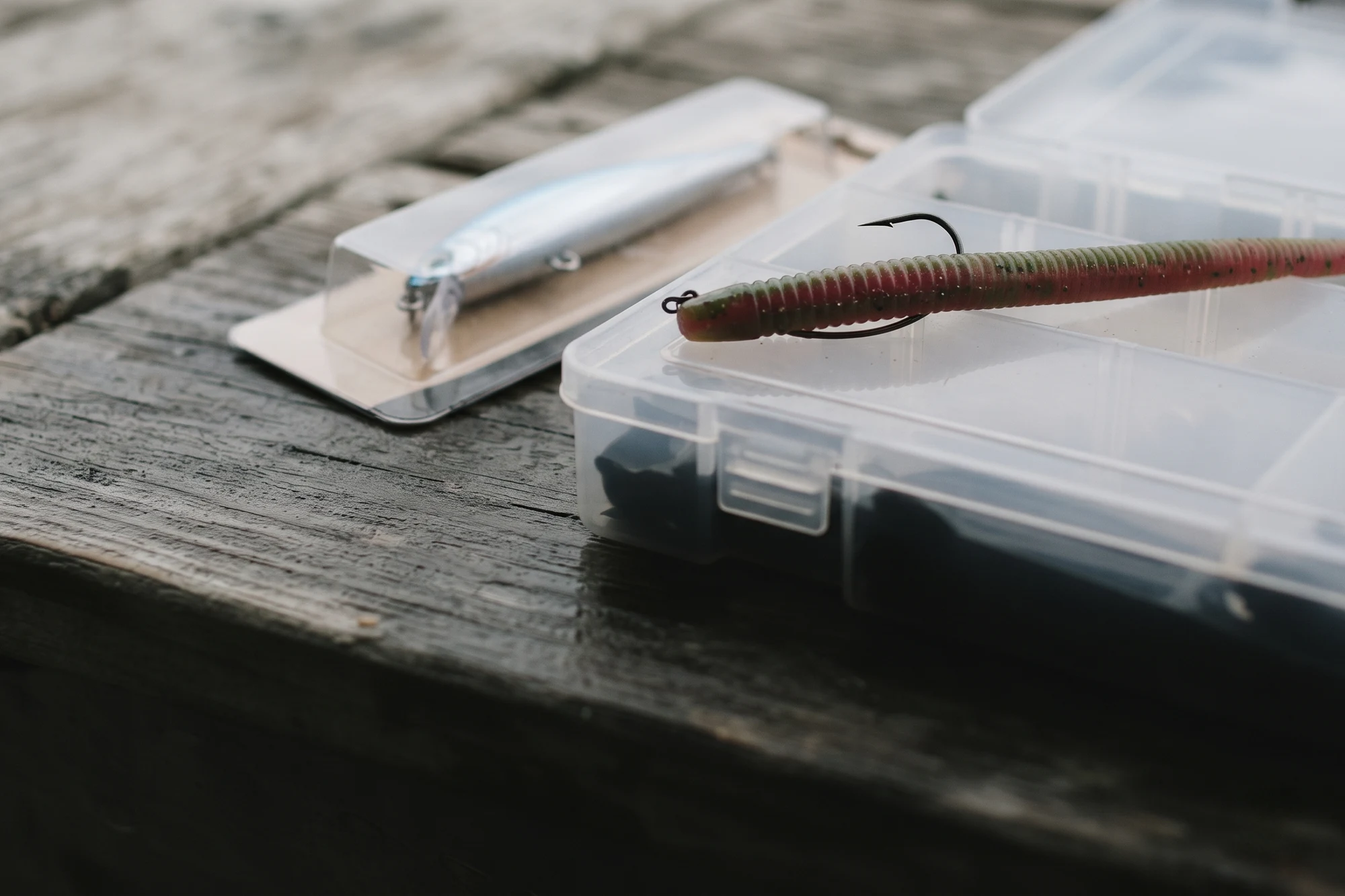
Two hours. No follows, no shorts, no bites from water you know has fish in it. The jerkbait is dead for the day. The question is not whether to switch, it is whether you are going to admit it now or waste another two hours arriving at the same conclusion.
This is the guide for people who want to arrive at it now.
What a cold front actually does to the fish
The mechanism is straightforward. A cold front passes through. Barometric pressure spikes: a rise of 0.10 inches of mercury or more in the preceding twelve hours is the rough threshold. Skies go bright and clear. Wind swings to the northwest. Sunlight that was scattered through cloud cover yesterday now hits the water column at full intensity.
Bass and walleye that were scattered and feeding in low light tuck tight to the nearest hard cover. A dock piling, a laydown, a ledge transition, the back of a weed pocket. The fish did not disappear. They stopped moving. There is a meaningful difference between a fish that is not in the area and a fish that is sitting with its nose against structure and refusing to commit to anything in its vicinity.
A jerkbait works by triggering a reflex. A fish that is not actively evaluating moving targets does not have that reflex engaged. You can vary the cadence all day (faster or slower, longer pauses, different rod angles) and none of it reaches a fish that has disengaged from reacting to lateral movement. The tool is not broken. The application is wrong.
What locked-down fish look like on sonar
If you are marking fish at all in post-front conditions, the image tells you what is happening. Negative bass show as tight blobs pressed against structure: right at the base of a piling, hard against a laydown trunk, at the exact depth where a rock transition meets softer bottom. They do not form loose suspended clouds. They are not hovering in the middle of the water column where you would have found them yesterday.
On a walleye lake, post-front fish often drop off the breaks they were actively working the day before and park on the nearest hard-bottom patch at the same depth. They are there. They are just sitting.
The sonar tells you two things: fish are present, and fish are not chasing. If you see suspended fish scattered through the water column, the bite may just be slow and a slower jerkbait cadence might still produce. Eight-second pauses in cold water can work when conditions are marginal. But tight fish sitting on structure in clear post-front light are a different situation. Extending the pause from eight seconds to twenty does not fix a fish that has stopped evaluating moving baits entirely.
When to make the call
Two hours of complete silence from known fish-holding water is the threshold. No follows, no shorts, no fish bumping the bait and turning off. Total absence of any response from structure you have confirmed holds fish.
Follows with no commitment mean something is still working, so adjust the cadence. Shorts mean the presentation is close, so slow down. Nothing at all, from water where the sonar showed you fish, means the presentation is wrong for the day.
The barometric signal makes this easier to anticipate before you burn the morning. A rapid overnight pressure rise combined with bright skies and northwest wind is about as reliable a jerkbait kill switch as you will find in freshwater fishing. It does not mean the fish stopped eating. It means they stopped chasing. Plan accordingly before you leave the dock.
The finesse switch: three rigs that work when reaction fails
The reason finesse presentations outperform reaction baits in post-front conditions is not magic. It is geometry. Instead of asking the fish to intercept a moving target, you put the bait where the fish already is and move it as little as possible.
Drop shot. A drop-shot rig parks the bait at a fixed point in the water column. The weight touches bottom; the hook is tied six to eighteen inches up the line on a Palomar knot; the plastic hangs in place and moves only when you shake the rod tip. You are not retrieving the bait; you are vibrating it while it stands still in front of a fish that will not come to you.
Use 8-pound fluorocarbon main line on a spinning setup. A No. 1 or 2 drop-shot hook in a size matched to a 3.5- to 4-inch finesse worm. The Yamamoto Senko rigged drop-shot style has enough salt content to pulse slowly on a tiny shake with almost no lateral movement, exactly what a lockjaw fish will eat when a jerkbait produces nothing.
Ned rig. A mushroom jighead (3/32 to 3/16 ounce depending on depth and wind) with a short ElaZtech or similar buoyant soft plastic. The hook goes in through the nose; the tail floats up off the bottom. You drag it slowly along structure or barely move it at all. Post-front bass eat Ned rigs almost reflexively once the jerkbait bite is dead, and the ElaZtech material means the bait is moving on vibration even when it looks stationary.
The Z-Man TRD TubeZ is the current standard for this rig because the material stands up and pulses on the slightest rod tip movement. Six-pound fluorocarbon on a light-action spinning rod. Lighter than you think you need. The bite on a Ned rig in post-front conditions is soft, more of a weight than a tap, and you will lose fish if the line is too heavy to feel it.
Shakey head. A 1/16- to 1/8-ounce shakey-head jig with a straight-tail finesse worm rigged through the nose keeps the bait on bottom and moving erratically on the lightest rod shake. The hook stands up through the plastic; the whole rig looks like something confused and alive against hard bottom. Drag it slowly, shake it in place, pause. On hard-bottom structure where post-front bass park, a finesse worm nose-down in front of a stationary fish will eventually produce where a jerkbait produced nothing.
The Yamamoto Senko works on a shakey head rigged nose-hook and produces a subtle quiver that reads as alive without requiring the fish to move to intercept anything.
Gear for the switch
Keep a finesse spinning rod rigged and ready before you need it. If you are running a medium or medium-heavy baitcaster for jerkbaits, the Ned rig and drop shot want a different setup: medium-light spinning rod, 2500-size reel, 6- to 8-pound fluorocarbon. The bite window on post-front fish is short and the takes are light. A baitcasting outfit built for jerkbaits misses a meaningful percentage of these.
This is not a dramatic tackle upgrade. A budget spinning setup in the right weight range fishes this presentation correctly. The finesse section has the specific plastics and micro jigs if you need a starting point for the box.
The part nobody wants to hear
The jerkbait will work again. Two days after the front, as pressure stabilizes and cloud cover returns, those same bass come off cover and start feeding. The suspending jerkbait will trigger a reaction from a fish that actively wants to react. That is when the tool matches the application.
A cold front does not end a season. It ends the day's jerkbait bite. Recognizing which kind of day you are having, before you spend four hours throwing at fish that stopped evaluating reaction baits after the front moved through, is the part that actually improves over time.
Check the pressure before you load the truck. If it spiked overnight, load the finesse box first. Or bring both and let two hours of confirmed silence make the decision for you. Either way, the decision gets made eventually.