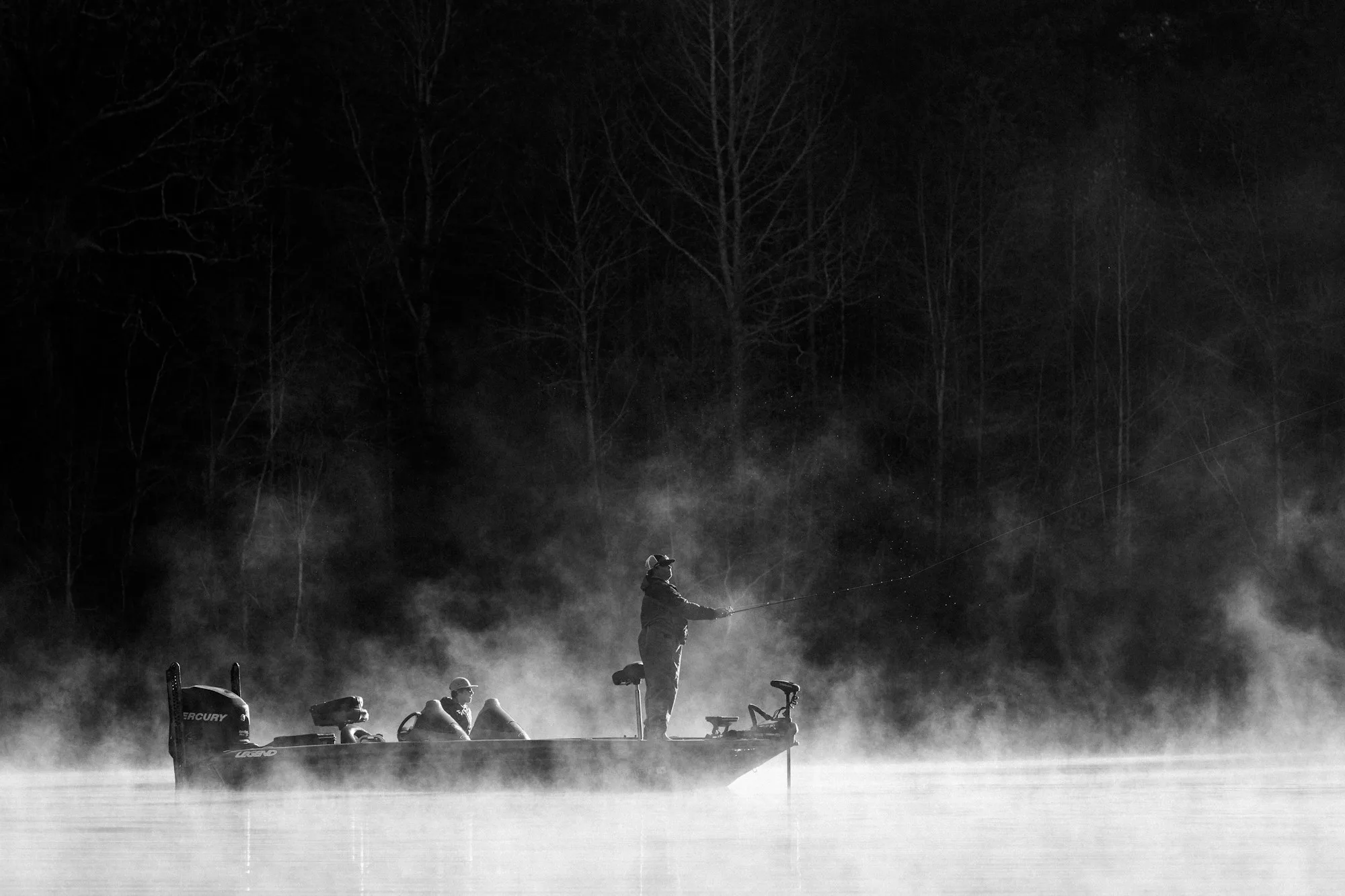
It is forty-one degrees, you cannot feel your thumb, and the bass on the second ledge are radiating contempt. This is the moment a jerkbait was invented for. It is also the moment most anglers get it wrong: too fast, too aggressive, hooks too small, and a thirty-dollar bait that ends up out-fished by a 1936 design that costs eight bucks.
Here is what actually works.
Why suspending plastic wins at forty-one degrees
Cold-water bass conserve calories. They do not chase. A suspending jerkbait, the kind that hangs neutrally buoyant when you stop it, sits in their strike zone indefinitely. You are not asking the fish to come get it. You are putting it in front of their face and waiting for them to decide they cannot stand looking at it any longer.
The strike usually happens during the pause. Not the jerk. Most fishermen miss this and keep working the rod through the bite.
The cadence: two jerks, eight-second pause
Cast it past the fish you are targeting. Reel down until you feel slight tension. Then:
- Two short downward jerks of the rod tip, sharp, six inches each. The bait should dart and dive a few inches.
- Pause eight seconds. Watch your line. The strike will look like the line jumping or going slack.
- Repeat. Do not reel during the pause. Slack between jerks is the entire point.
At forty-one degrees, eight seconds is the floor. At thirty-eight, push it to twelve. The colder the water, the longer the bait sits. We have caught fish on a thirty-second pause in February.
Line: 8 lb fluoro, lighter is better
Heavy line kills the action. The bait wants to suspend; mono floats; braid is too visible in cold clear water. Fluorocarbon is the answer because it sinks at roughly the same rate the bait does, keeping the suspending action true. Eight pound test is the standard. We have run six in clear water with no regrets and one lost fish.
Length matters too: a leader of at least fifteen feet between any braid backing and the bait. The fish are looking at it for eight seconds at a stretch. Do not give them a reason to second-guess.
Hook upgrade: stock trebles to ST-36 or VMC 1X
Most jerkbaits ship with adequate hooks, not great hooks. In cold water, the bite is soft: a fish picks up the bait and holds it without much aggression. You need a hook that penetrates on the lightest hookset. Owner ST-36 or VMC 1X round-bend trebles in the appropriate size will turn a lot of "I think I had one" into "fish in the boat."
One caveat: heavier hooks change the buoyancy. After swapping, you may need to add a tiny strip of suspend-dot (or one wrap of lead wire on the front hook hanger) to bring the bait back to neutral. Test in a sink before you fish.
The Husky Jerk still wins in March - here is why
The Rapala Husky Jerk has been catching bass since 1936. It is balsa wood, hand-painted in Finland, and costs about eight dollars. It outfishes baits ten times its price in cold water for one reason: the body shape is more responsive to the cadence than any plastic copy. When you jerk it, it darts farther per twitch. When you stop, it hangs longer per pause. The fish notice.
This is not a knock on Megabass or Lucky Craft. They are exceptional baits with their own moments. But on the days the water is the color of weak coffee and the air is cold enough to crystallize a wet glove, the eight-dollar wooden bait wins. Buy three. You will lose at least one to a rock.
Three picks that punch above their price
- Rapala Husky Jerk 12, the eight-dollar template.
- Smithwick Suspending Rogue, cold-water religion. Tournaments are won on this bait every March.
- Megabass Vision 110 Jr., the premium option. If you can only own one expensive jerkbait, this is it.