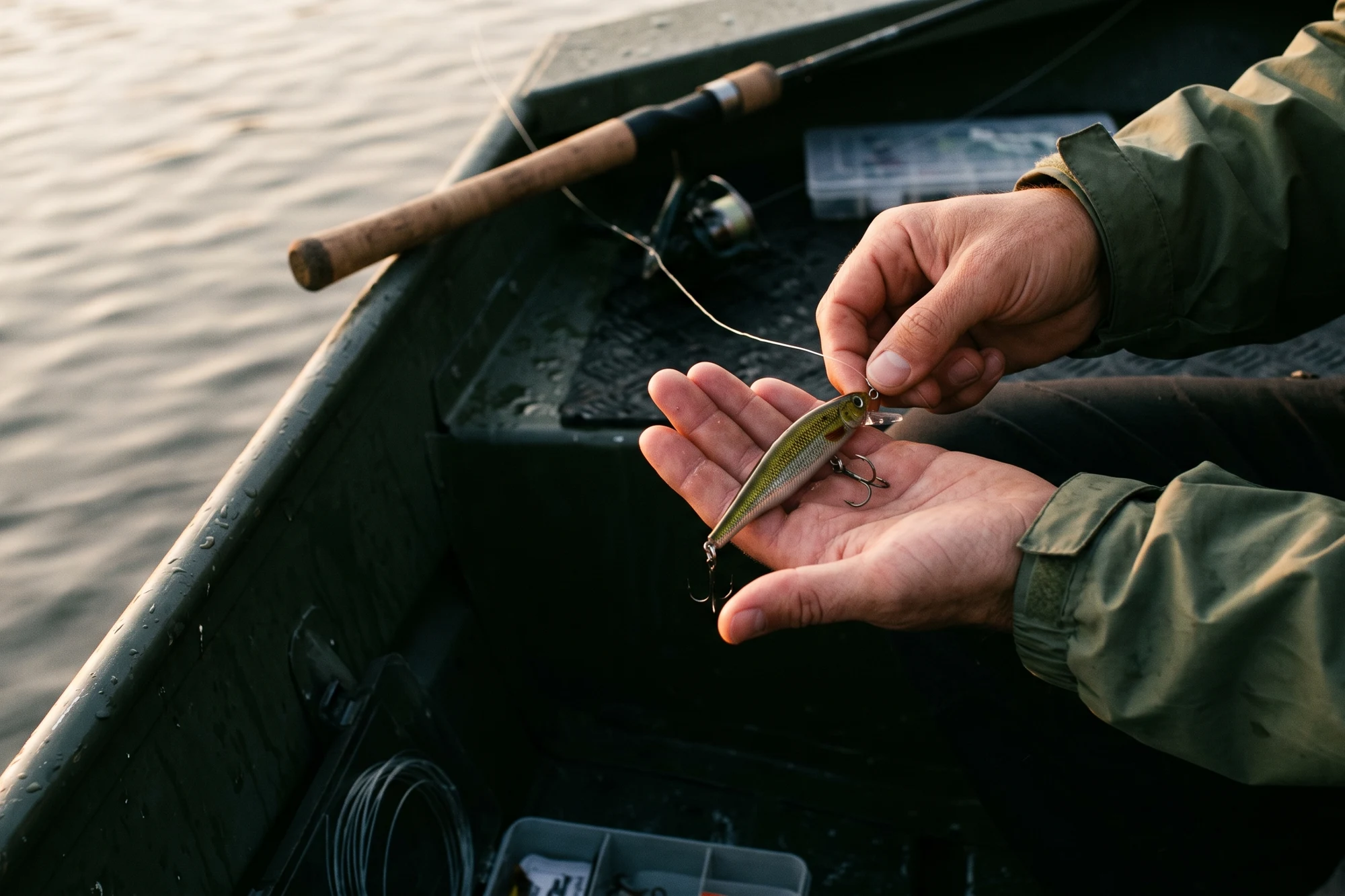
The jerkbait is sitting still. Your line has a small bow in it. Something moves, and the soft-plastic reflex says to swing for the fences. That can spend half the hookset straightening line while the lure barely moves. Three small treble points do not need a home-run swing; they need contact and a rod that stays loaded.
Recognize a bite on the pause
A jerkbait strike can be a sharp hit. It can also show up as added weight when you start the next snap, a tick in the line, or a sideways move where the line enters the water. Wind and current move line too, so look for a change from what it was doing a moment ago. A soft-plastic bite can be subtle as well; there is no reliable sound or feel that identifies every fish.
Keep a slight bow in the line during the pause so you are not towing the lure forward. Keep the bow small enough that you can see where the line enters the water. If you have a wide loop lying on the surface, gather some of it before the next snap. Jerking 101 explains the rod and reel rhythm, and the pause guide covers how long to leave the bait alone.
What the hard swing gets wrong
One or more treble points may catch when a fish takes the lure. Where they catch and how well they hold vary from bite to bite. There is no rule that two points must be buried before a fish can be landed, or that a hard set always pulls the lure free.
The avoidable mistake is swinging against slack. The rod travels, the line straightens, and only the last part of the motion reaches the hooks. If the fish is moving toward you, the gap can grow while you swing. A violent snap on already tight line can also pull against small points harder than the tackle or their hold can tolerate. Neither move earns bonus points for looking dramatic.
Reel up, then load the rod
When the line moves unexpectedly or the lure suddenly feels heavy, stop jerking the bait. Point the rod toward the line, turn the handle until you feel the fish, then make a smooth sweep to the side. Keep reeling as the rod bends. If the line is already tight and the rod is loading, you can go straight into that controlled sweep. The goal is firm pressure at the hooks, not a fixed number of handle turns.
Do not drop the rod tip so far that you create another loop. Do not reel hard against a fish that is already pulling drag. A steady pull with the rod working gives the hook point a chance to take hold without a sudden shock. A treble can hook a fish on one point; another point may catch later, but you cannot force that by swinging harder.
Keep pressure through the fight
Once hooked, keep a bend in the rod and wind when the fish gives you line. Let a properly set drag handle a hard run. If the fish turns toward the boat, reel to keep up. If it jumps, lower the rod enough to avoid pulling straight up, while keeping contact. You do not need to yank its head down or hand it a slack loop.
A fish that comes off beside the boat might have been lightly hooked, might have shaken free, or might have met a loose line during the landing. You usually cannot diagnose the exact cause after the fact. Slow down at the net, keep the rod loaded, and bring the fish within reach instead of trying to lift it by the line or lure.
Check the tackle before blaming the set
Mono stretches and can cushion a sudden pull; fluorocarbon stretches too, though differently, and braid has little stretch. Rod action, drag, line length, and hook wire all affect how much force reaches the fish. No one line material makes this hookset work or fail on its own. Choose a setup you can control and adjust the drag to the line and hooks. The jerkbait rod guide explains the tradeoffs in the blank.
Inspect the points if fish keep coming unbuttoned. Replace bent or dull hooks with the right size and weight for the lure. A heavier replacement can change how a suspending jerkbait sits in the water, so check its behavior beside the boat after a swap. The suspending-bait guide explains why the whole rig matters. Handle exposed trebles with pliers when unhooking fish; the second hook can catch a hand while the fish twists.
The practical drill is simple: pause, watch the line, reel until you feel weight, and sweep smoothly. If you miss, check how much slack was left before changing gear or trying to hit the next fish harder.