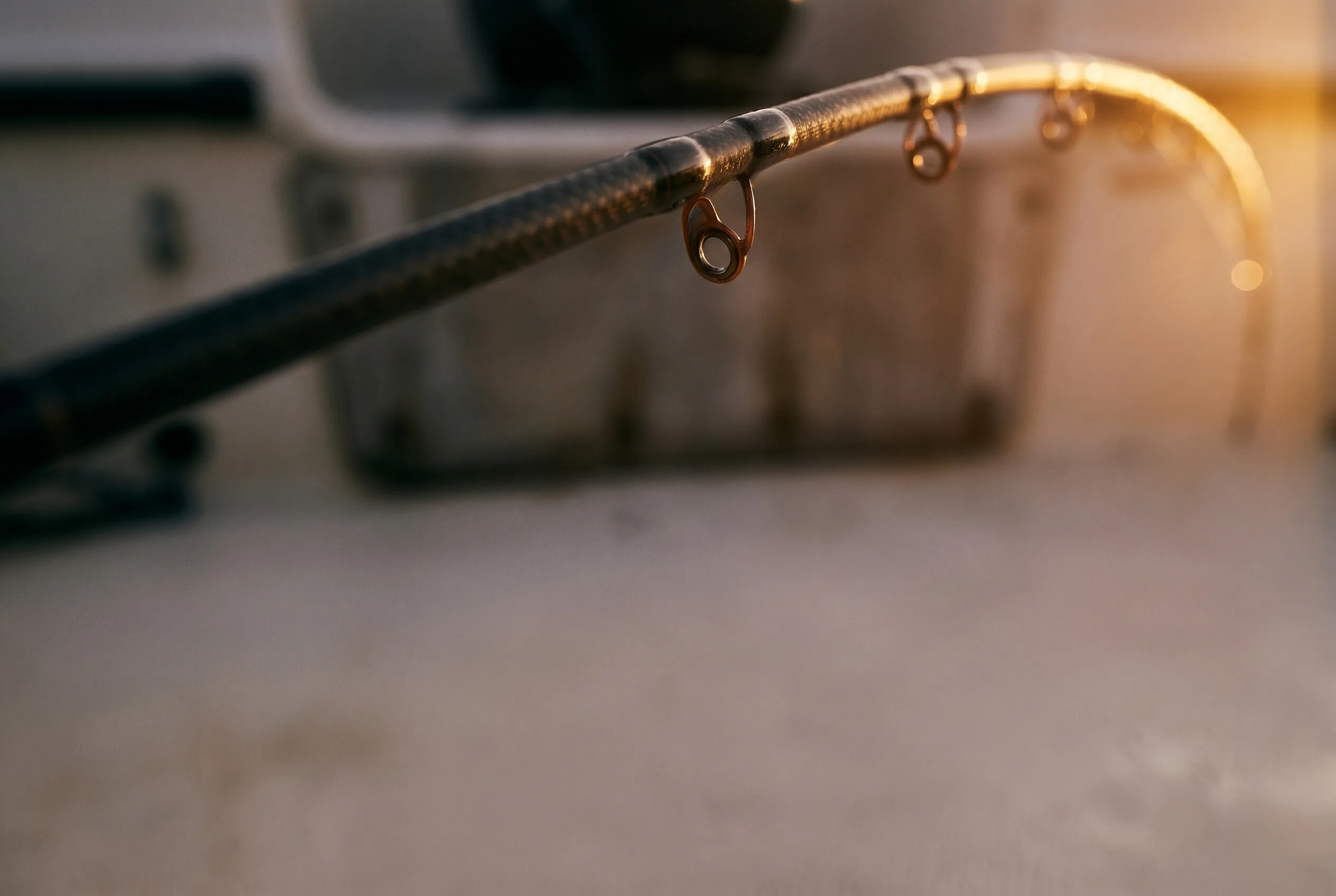
Most bass anglers discover the hard way that a crankbait rod fishes jerkbaits poorly. The action is wrong, the tip is too soft, and the rod loads differently than the technique requires. Jerkbait fishing has a specific mechanical demand: a fast tip that loads sharp energy on the snap and recovers instantly for the next jerk, and most general-purpose bass rods are not built to deliver it.
Here is what to look for, what each budget tier costs, and which rods are actually worth the money.
What "fast action" actually means
Rod action describes where the blank flexes. A fast-action rod flexes in the top third. An extra-fast rod flexes only in the top quarter. For jerkbait fishing, you want fast to extra-fast action, not moderate. A moderate-action rod bends through the middle of the blank and absorbs the energy of your snap, so the bait gets a softer, slower input than you intended, and your hookset is dampened before it reaches the hook.
Fast action delivers the snap cleanly. The rod loads and recovers quickly, putting the full energy of your wrist movement directly into the bait. The fish feel the hook, not the rod absorbing the set.
Power: medium-light vs. medium
Power describes the rod's resistance to bending under load. For jerkbaits in the 90–130mm class, medium-light is the most common recommendation: light enough to feel the bait work, stiff enough to pull hooks on a bass. For bigger jerkbaits (140mm+) or fishing heavy cover, medium power is more appropriate.
The medium-light jerkbait rod is the most versatile. It handles the standard 110mm class with precision, provides feedback to feel the bait's action during the jerk, and loads comfortably for long casts into headwinds. The rods below are all medium-light unless noted.
Why 6'10" became the standard length
At 6'10", you have enough blank to load for distance casts, the tip sits close to the water at the four-o'clock rod position (which keeps the bait in the right zone), and the rod is short enough to manage without fatigue on a long day.
Shorter rods (under 6'6") reduce cast distance and make long-line presentations harder. Longer rods (7'2"+) raise the tip too high during fishing, which changes the angle of attack on the jerk and often lifts the bait above its target depth. Six foot ten is where physics and technique agree.
Baitcast vs. spinning
Baitcast is the standard choice for jerkbait fishing for two reasons: line control and casting distance. A baitcaster lets you thumb the spool on the cast, which matters when you need to stop the bait precisely at structure. It also casts heavier jerkbaits more efficiently than an equivalently priced spinning reel.
That said: a medium-light spinning setup with 8-pound fluorocarbon will catch fish on jerkbaits. The baitcaster is an upgrade, not a requirement. Learn the technique first; obsess about gear second.
The four budget tiers
Under $100 - the starting point
The 13 Fishing Defy Black 7'3" M at under $75 is the best argument at this tier: SCIII carbon blank, Fuji reel seat, crisp fast action. It is a beater rod you would actually feel bad beating up. The length is slightly longer than standard jerkbait spec but fishes the technique well. If you are starting out and not sure you will stick with jerkbait fishing, start here.
$150–$200 - the sweet spot
This is where quality becomes noticeably better and rods start to feel built for jerkbait fishing specifically. The St. Croix Mojo Bass 6'10" MF Jerkbait at $190 is American-made, has a properly fast tip, and transmits cadence better than anything at twice its price from most brands. The Abu Garcia Veritas Tournament 6'10" M at $175 runs slightly softer but loads well on the pause-snap-pause cadence and is an excellent step-up rod for anglers who know the technique and want more feedback from their gear.
$200–$300 - the Shimano tier
The Shimano Zodias 6'10" ML Jerkbait at $270 changed the conversation about what a mid-range jerkbait rod could be. Fast tip, weight balanced exactly where it needs to be, sensitivity that lets you feel the bait dart on every jerk. If you are only going to own one quality jerkbait rod and budget is a consideration, this is the tier to spend in. You will not outgrow it.
$300+ - the GLX conversation
The G. Loomis GLX Jerkbait 6'10" M at $525 is lighter than your ego, more sensitive than your fishing partner, and built specifically to make a jerkbait do exactly what you tell it. GLX is the reason other premium rod makers pray you do not compare blanks side by side. If you are spending tournament money, this is the answer. If you are not, the Zodias does ninety percent of what the GLX does for half the price. Know which situation you are in before you buy.
The rod that teaches cadence
Every rod on this list will catch fish. The difference between budget and premium is not fish-catching capability. It is how clearly the rod communicates what the bait is doing. A GLX or a Zodias lets you feel the bait dart with enough sensitivity that you start to know, on the pause, whether the fish is considering the bait or ignoring it. That feedback teaches cadence faster than any guide can write about it.
See all picks in the jerkbait rods filter, or browse the full Rods & Reels category.