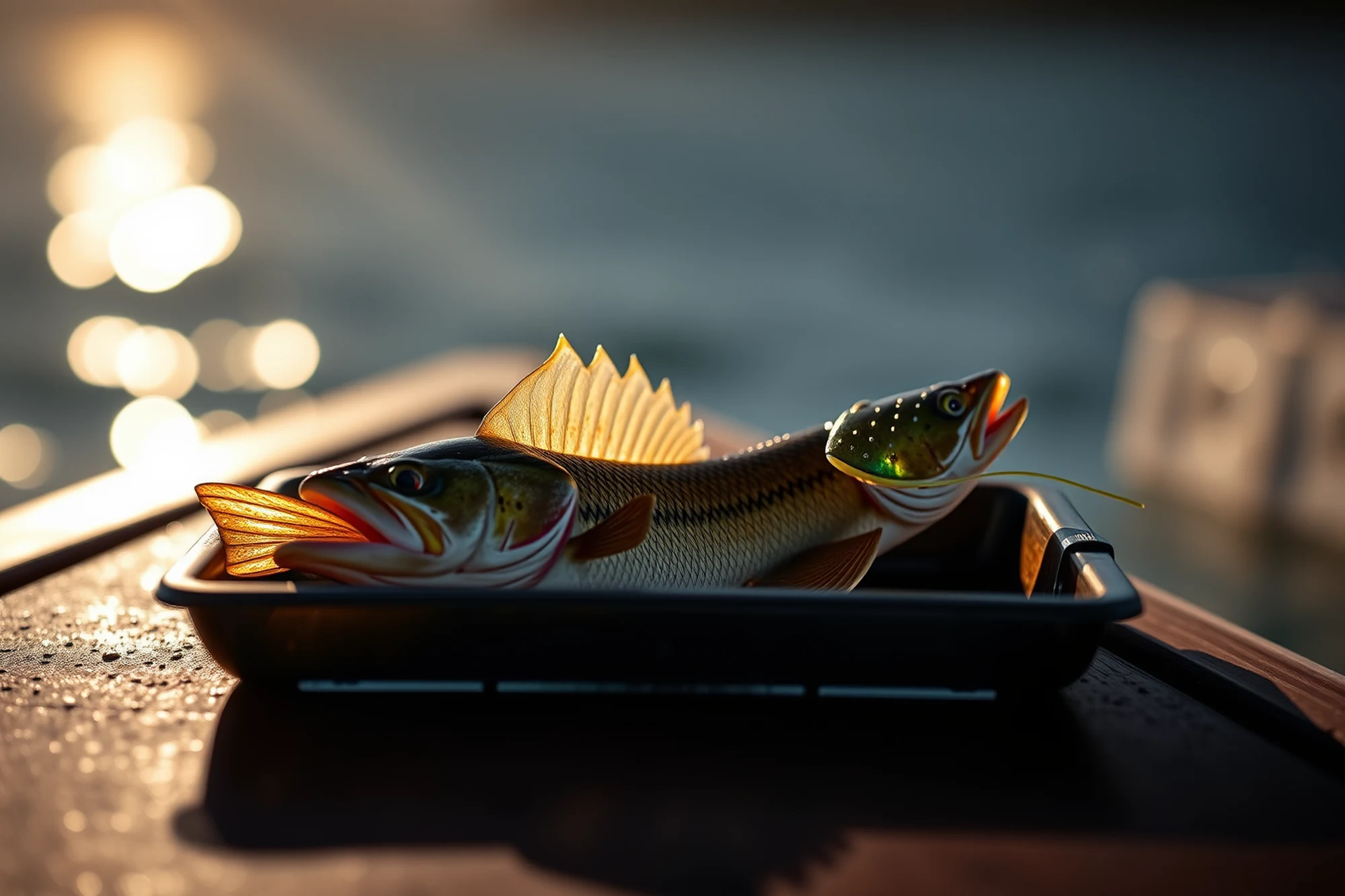
The jerkbait came back decorated again. Hydrilla stems jammed between the belly and tail trebles, a lily pad stalk wrapped tight around the front hook. You cleared the weeds, cast again into the same pocket, got the same result in about four seconds. Made another cast anyway.
This is not a cadence problem. It is not a retrieve-speed problem. There is no twitch-pause sequence that clears three exposed treble hooks from heavy vegetation. The hooks are pointing outward; the vegetation is in the water; contact is the expected outcome.
Why exposed trebles foul in vegetation
A jerkbait carries three treble hooks, each with three points extending outward from the shank. In open water, those points track clean through the strike zone. In vegetation, each of those nine points is available to catch a stem, a leaf, or a mat of hydrilla on every motion you impart to the bait.
The damage happens in both directions. The forward cast puts the bait into the cover. The jerk motion drives the hooks into whatever is in contact with them. The retrieve pulls the whole wrapped-up mess back toward you. There is no speed, no angle, and no cadence adjustment that changes this outcome. A faster retrieve can sometimes reduce fouling in sparse, stemmy grass by letting the bait deflect off stems before the hook gets a full bite. But in anything dense — matted pads, thick hydrilla, flooded grass beds that have grown to the surface — the first cast tells you everything you need to know.
Where the line is: sparse versus heavy
There is workable middle ground, and it is worth identifying before you swap rods.
Sparse isolated lily pads with three or more feet of open water between the pad edges are a different situation than a mat. In that kind of sparse cover, the jerkbait can find the open-water gaps and fish them. You are not fishing the pad itself; you are fishing the water between pads, where bass often sit looking up into the gaps. That can work.
The line from manageable to wrong tool is roughly this: if you cannot complete two jerk-pause-jerk cycles without picking up vegetation, you are past the line. In anything dense enough that the pads are touching or within a foot of each other, you will know on the first cast. The bait is wrong for the situation. Put it back in the rod holder.
What actually works, by cover type
Submerged grass — sparse to moderate hydrilla, coontail, or milfoil with visible stems and open water above: a Texas-rigged soft plastic fishes this water without fouling. A Yamamoto Senko 5" nose-hooked on a 3/0 offset worm hook rides with the hook point tucked against the back of the bait. It slides through stems that would park a treble hook in a quarter-second. Cast past the edge of the grass bed and work it through on a semi-slack line, keeping just enough tension to feel the bait. The hook drives home on the strike.
Open pockets in lily pads — fields with gaps big enough to drop a bait into: a weightless Zoom Super Fluke on a 3/0 offset hook is the right call. It lands quietly in the pocket, shimmies on the fall, and sits at the edge of the pad with that dying-baitfish posture that bass in lily pad fields find impossible to ignore. Bass in heavy pad fields spend most of the day sitting in or under the pads, looking upward into open water. You are putting the bait directly over their heads. The strike often happens before you move it.
Heavy surface mats — lily pads edge-to-edge, or hydrilla grown to the surface and matted over — requires a hollow-body frog rigged on a wide-gap hook. The hook rides inside the body cavity during the retrieve and punches through the mat cleanly, coming weedless through cover that would stop any treble-hook bait completely. Work it across the mat with a walk-the-dog cadence, pause it on any open window you see, and set with authority when the fish commits — you need to drive the hook through the frog body before you get into the fish.
None of these three tools has an exposed treble hook. That is not a coincidence.
Reading the water before the first cast
The most expensive way to learn cover selection is burning the two best hours of morning light on the wrong bait while the fish are active on shallow cover and then gone.
Look at the water before you pick up a rod. You are looking for density and openings.
- Pads with three or more feet of open water between them: jerkbait works in the gaps, not over the pads.
- Pads within a foot of each other or touching: weightless fluke in the pockets.
- Pads matted edge-to-edge or flush with the surface: hollow-body frog on top.
- Submerged grass with open water above the tips: Texas-rigged soft plastic through the stems.
- Grass matted to the surface: hollow-body frog.
This takes about thirty seconds to assess from the bank. That thirty seconds is not wasted. It is the decision that determines whether you catch fish or untangle weeds for the next two hours.
This is not a failure of skill. Every angler who picked up a jerkbait first understood, correctly, that a jerkbait catches bass. The gap is in gear selection, not technique — and the sooner you close that gap, the more fish you touch during the part of the morning when they are actually catchable. For the open-water situations where a jerkbait is the correct call, Jerking 101 has the cadence. For cover, the weedless soft plastics filter and the full soft jerkbaits guide have the rigging details and picks for every scenario.