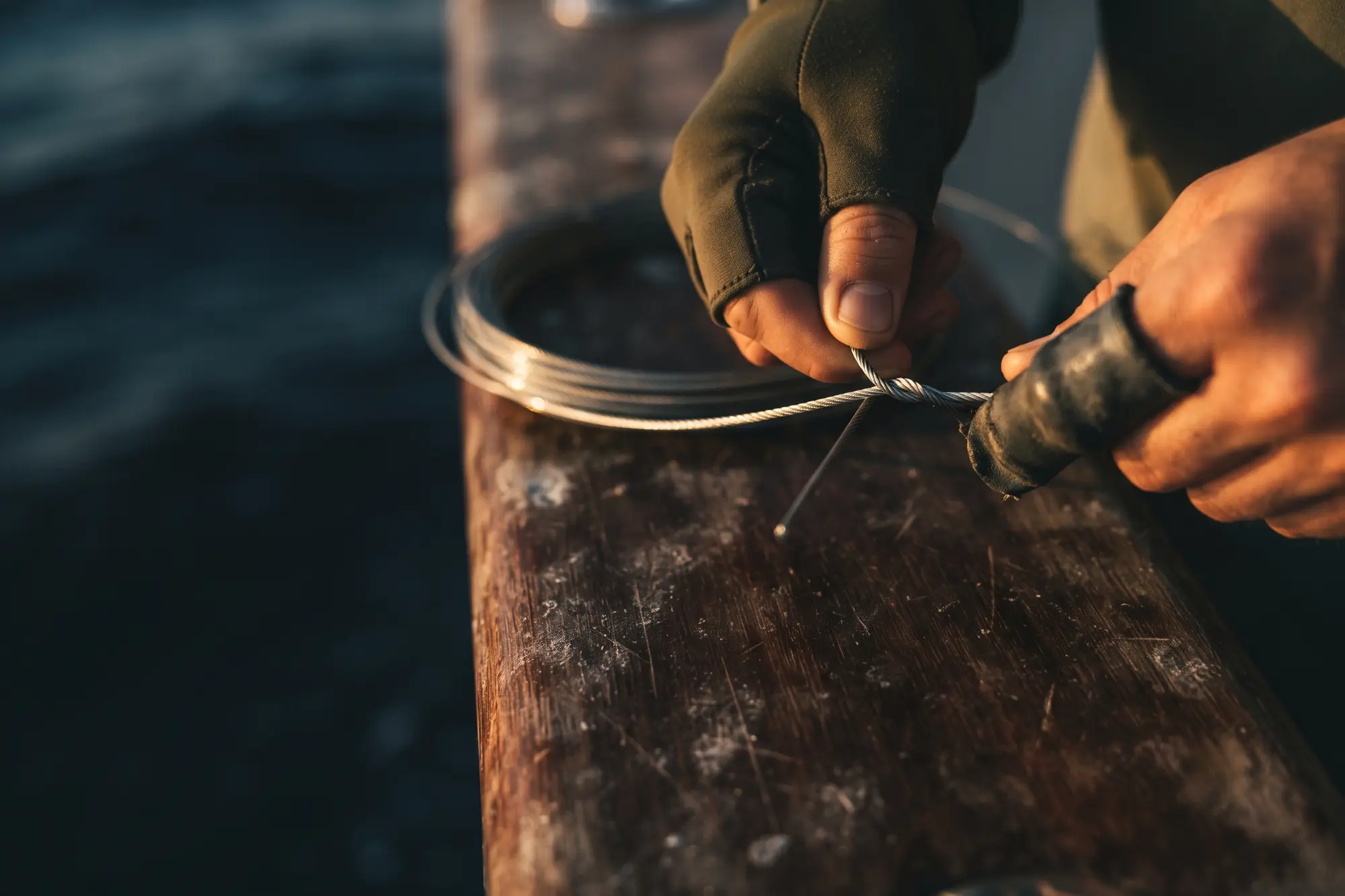
Fluorocarbon leader is nearly invisible and ties clean knots, right up until something with real teeth grabs it, at which point it's just an expensive way to lose a lure. American Fishing Wire's Surflon nylon-coated 1×7 is the fix: a seven-strand wire core wrapped in a nylon jacket, sold in 30 ft spools for under $10, that trades a little visibility for a leader that doesn't get cut by anything short of a serious set of jaws.
What "1×7 nylon-coated" actually means
1×7 refers to seven wire strands twisted into a single unit (as opposed to 7×7, which is seven bundles of seven strands, more supple, more expensive, and typically uncoated). The nylon coating does two jobs: it kills the shine that would otherwise flash and potentially spook line-shy fish, and it smooths the wire's surface enough that you can tie an actual knot in it instead of relying purely on crimps.
That knottability is the whole reason to choose this over bare stainless wire. Bare 1×7 or 7×7 wire is stiffer and slicker: you're crimping or using a haywire twist, full stop. The nylon coating adds just enough grip and give that a uni knot or improved clinch knot will hold, which matters when you're rigging at 5am without a crimping tool in hand.
Break strength and when to size up
Surflon is sold by test rating, and matching it to target species matters more than defaulting to "heaviest available." Oversized wire leader is stiffer, more visible in the water, and kills the natural action of a bait fished on a jerk-pause cadence or a slow-rolled swimbait. Undersized wire against a genuinely toothy fish is just an expensive way to find out where the limit is. Match the rating to the species you're targeting on that trip, not to the worst-case fish you might hypothetically hook.
Wire vs. heavy fluorocarbon: when each wins
- Heavy fluoro (60–100 lb) wins against fish with soft mouths and no real cutting teeth, snook, redfish, most inshore gamefish. Wire is overkill and costs you bites from leader-shy fish in clear water.
- Wire wins against kingfish, bluefish, barracuda, wahoo, or anything with teeth that shred fluorocarbon on contact, not just on a hard take. If bite-offs are a repeat problem on a given trip, that's the signal to switch, not to size up fluoro further.
Storage note
Nylon-coated wire still corrodes at the cut ends and crimp points if it sits wet in a tackle tray. Rinse and dry leaders after a saltwater trip the same as you would hooks and swivels. The coating protects the strand, not the exposed metal at either end.
Verdict
For the price, the Surflon 1×7 nylon-coated is the easiest bite-off insurance in the tackle box. Keep a spool rigged for any trip where toothy fish are a realistic possibility, and switch back to fluorocarbon the moment the target species doesn't call for it. The invisibility and action of fluoro is worth more than wire's toughness when teeth aren't the problem.