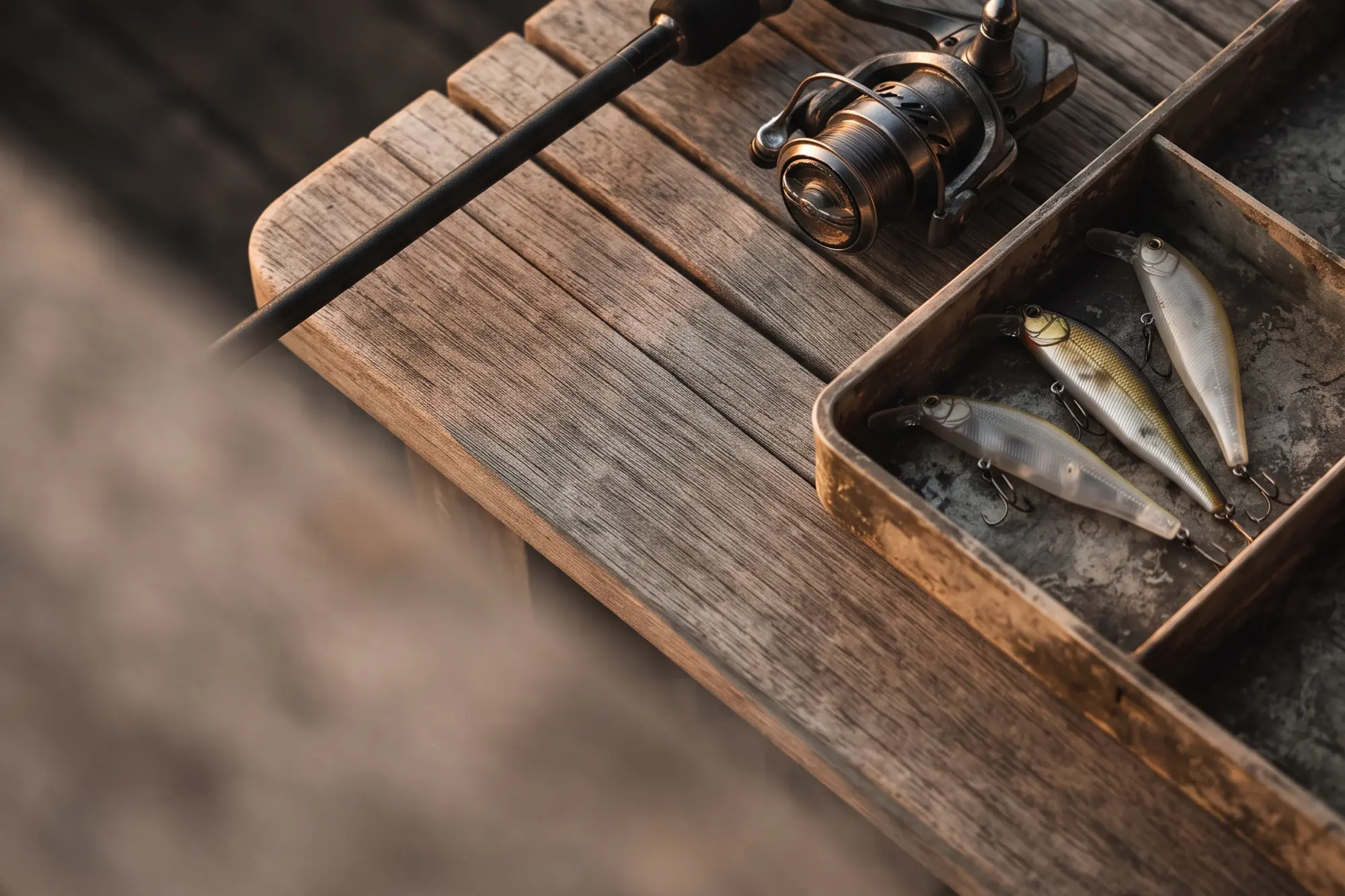
Somewhere on the internet right now, someone is telling a beginner to buy a $400 rod, a $300 reel, and forty color patterns of the same lure "just in case." Ignore that person. You are going to spend under $150 total, own three baits that actually do different jobs, and understand why jerkbait fishing is not the same sport as reeling a crankbait past a stump. That is the whole curriculum for day one.
Jerkbaits are not crankbaits with a better name
A crankbait does its work on a steady retrieve: you reel, the lure wiggles, the fish decides. A spinnerbait is the same idea with blades. A jerkbait does almost nothing on the reel. The reel exists to gather slack. The rod does the fishing. You are imparting motion in short, deliberate bursts and then doing nothing at all, which is the part that feels wrong to a beginner and is also the entire point. If you fish a jerkbait like a crankbait, you are just trolling an expensive lure past bored fish.
The 3-lure starter set
You need exactly three baits to cover the situations you will run into constantly. Not ten. Three.
- One suspending hard jerkbait: theRapala Husky Jerk 12 is the correct first bait in this category. Balsa body, true suspend, and a cadence-forgiving action that tells you when you jerked it right because you can feel it dart through the rod blank. This is your cold-water and neutral-mood bait.
- One soft plastic fluke-style bait: theZoom Super Fluke rigged weightless on a wide-gap hook. Nearly weightless, subtle, and the single most forgiving lure in this entire technique. New anglers who overwork a hard jerkbait usually still catch fish on a fluke, because half the motion you think you need is already too much.
- One lipless rattlebait: theBill Lewis Rat-L-Trap. Technically fished on more of a lift-fall retrieve than a strict jerk, but it belongs in the same box for the same reason: it covers warm, aggressive-mood water fast, and it teaches you the difference between "reeling a bait" and "moving a bait with your rod," which is the entire skill you are here to build.
That is the whole starter kit. One hard suspending jerk for neutral and cold fish, one soft fluke for finesse situations and pressured water, one lipless rattlebait for covering water fast when fish are aggressive. Every jerkbait situation you will encounter in your first season maps onto one of these three.
Rod and reel: don't overthink it
We already wrote the long version of this. ReadBest jerkbait rods: how to pick the right one if you want the full breakdown of blank action and power ratings. The short version for day one: get a 6'10" medium-light, fast-action rod paired with a reel in the 6.4:1 to 7.1:1 range. That combo covers all three of the baits above without compromise. You do not need a dedicated rod per lure yet. You need one competent rod and about forty hours on the water.
The cadence, in plain English
Cast past your target. Reel down until the line has slight tension. Then: jerk, jerk, pause. A jerk is a short, sharp downward snap of the rod tip, four to eight inches, not a sweep. Two of those back to back, then stop completely for a few seconds. Do not reel during the pause. The pause is when the fish decides. Reeling through it drags the bait out of the strike zone and tells the fish the wounded baitfish act was a bluff.
If you get follows but no committed strikes, slow the cadence down and lengthen the pause before you change anything else. Beginners almost always fish too fast. The fish have all day. You do not need to rush them.
You will lose lures. That is the sport.
You will hang the Rat-L-Trap on a stump within your first hour. You will lose a Husky Jerk to a rock ledge you swore you cleared. This is not a sign you are doing it wrong. It is a sign you are fishing structure, which is where the fish actually live. Anglers who never lose a jerkbait are anglers who are fishing open water where nothing lives. Budget for losses. Buy two of whatever you like most. Tie better knots than you think you need to. Then go fish somewhere that scares you a little.
That is the entire on-ramp. One rod, one reel, three baits that each do a real job, and a cadence you now understand well enough to feel stupid about the first time you reel through a pause anyway. Everyone does it once. Then you stop.