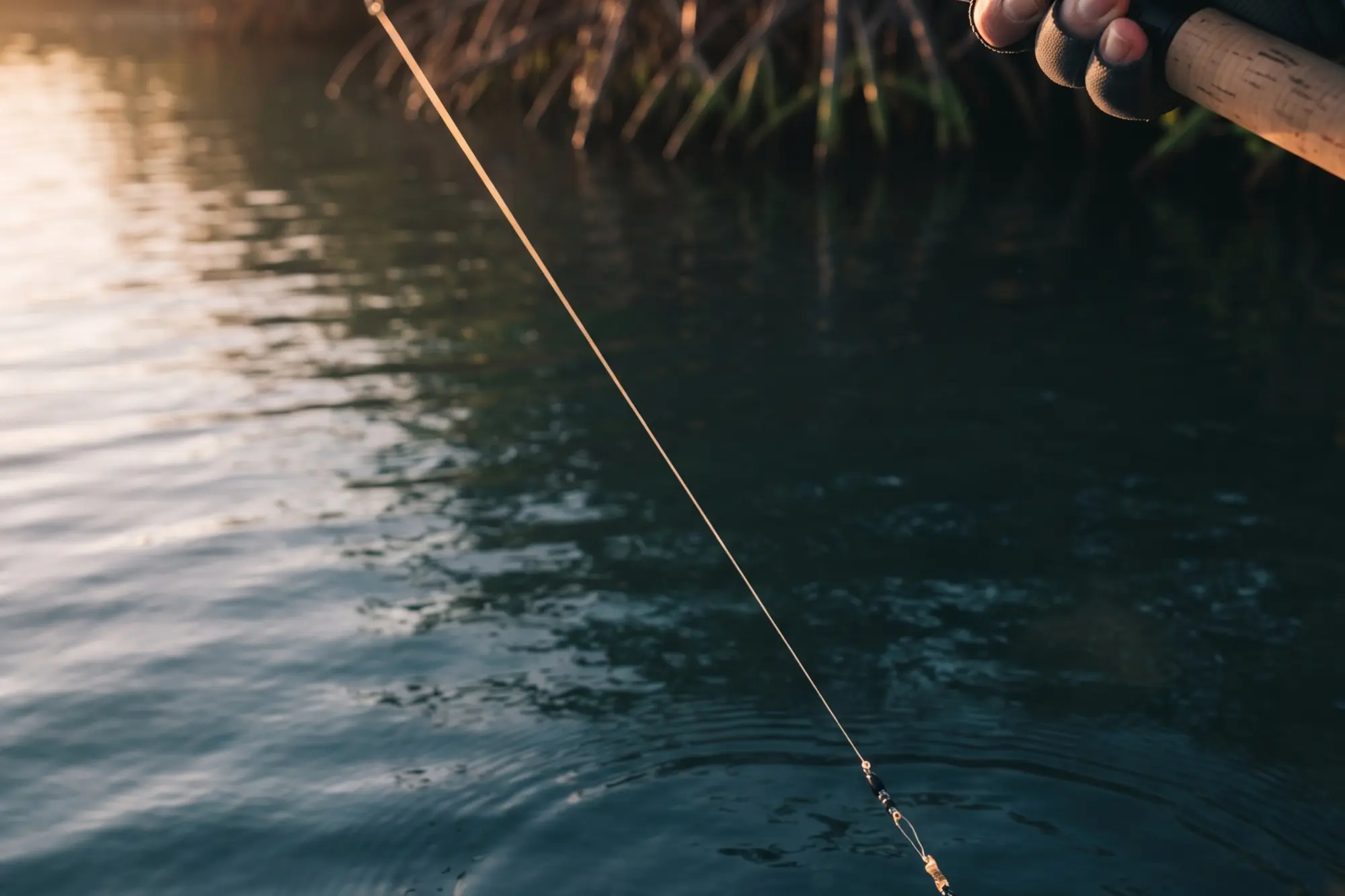
This is the one page on TotalJerks telling you to stop jerking. Read the rest of the site and every guide says some version of "snap the rod, feel the dart, set hard on tension." All of that advice is correct for a J-hook. None of it applies here. If you have a circle hook tied on and you rear back and cross its eyes the way forty years of bass-fishing instinct has trained you to, you will very often pull the hook clean out of the fish's mouth and lose it. This is an intervention, not a technique upgrade.
What a circle hook actually is
A circle hook's point curves back in toward the shank, almost closing the gap, instead of standing out perpendicular like a J-hook's does. That shape is not decorative. It is a mechanism. A circle hook is designed to slide out of a fish's throat or stomach as the fish swims away with the bait, catch on the corner of the jaw on its way out, and rotate itself into a set, automatically, with zero help from you. It is, functionally, a hook that sets itself if you get out of its way.
Why a jerk defeats the entire design
A hookset jerk yanks the hook back through the same path it just traveled forward. On a circle hook, that motion drags the point straight back out of the fish's mouth before it ever gets the chance to rotate and catch the jaw corner. You are not helping the hook set. You are physically preventing the one motion the geometry needs to work. The harder and faster the jerk, the more efficiently you undo forty years of hook-design engineering in about a quarter of a second.
The correct technique: lift and reel, nothing else
When you feel weight (not a tap, actual sustained weight), do not jerk, do not sweep, do not "cross their eyes." Point the rod at the fish, take up slack, and simply start reeling while lifting the rod tip smoothly. Steady pressure. That is the whole hookset. The circle hook does the rest on its own as the fish continues to move and the line comes tight. It feels anticlimactic the first dozen times. It also works dramatically better than a jerk once you trust it.
Rig it right or the technique doesn't matter
A steady lift-and-reel hookset only works if the connection between your main line and the hook is solid enough to transmit pressure without slipping or popping under load, since a hook set gradually still needs to bite. Use a proper snap swivel like theDRFISH Coastlock snap swivels for quick rig changes between baits, and step up your leader material too, something likeAFW Surflon nylon-coated leader wire, so abrasion or a toothy fish doesn't cut the connection before the circle hook ever gets the chance to do its job. Sloppy terminal tackle will sink a perfect lift-and-reel just as fast as an aggressive jerk will. If you want the full breakdown of rigs and category picks, theTerminal Tackle category has the rest of what belongs in the box.
When circle hooks aren't optional
In many U.S. states, and under NOAA regulations covering a range of federal saltwater fisheries, circle hooks are legally required when bait fishing for certain species. This is common, growing, and not going away, because circle hooks dramatically reduce deep-hooking and gut-hooked mortality on released fish compared to J-hooks. The exact requirements vary by state, species, and fishery, so check your local regs before you head out. This page is technique, not legal advice. But the trend is consistent enough that if you fish saltwater bait rigs at all, you should already know this hookset cold, not learn it the day a warden asks what's on the end of your line.
Why this matters even if it's not required where you fish
Even where circle hooks aren't mandated, the conservation case for them holds up on its own. Deep-hooked and gut-hooked fish that get released have meaningfully worse survival odds than fish hooked cleanly in the jaw corner. A circle hook fished correctly produces jaw hookups at a dramatically higher rate than a J-hook on bait. If you practice any catch-and-release at all, this is one of the highest-leverage habit changes available to you, and it costs nothing except unlearning one reflex.
So: every other guide on this site is going to tell you to jerk. This one isn't. Lift, reel, trust the hook, and let the fish set itself. It's the least satisfying hookset in fishing and the one most likely to still have your fish attached at the boat.